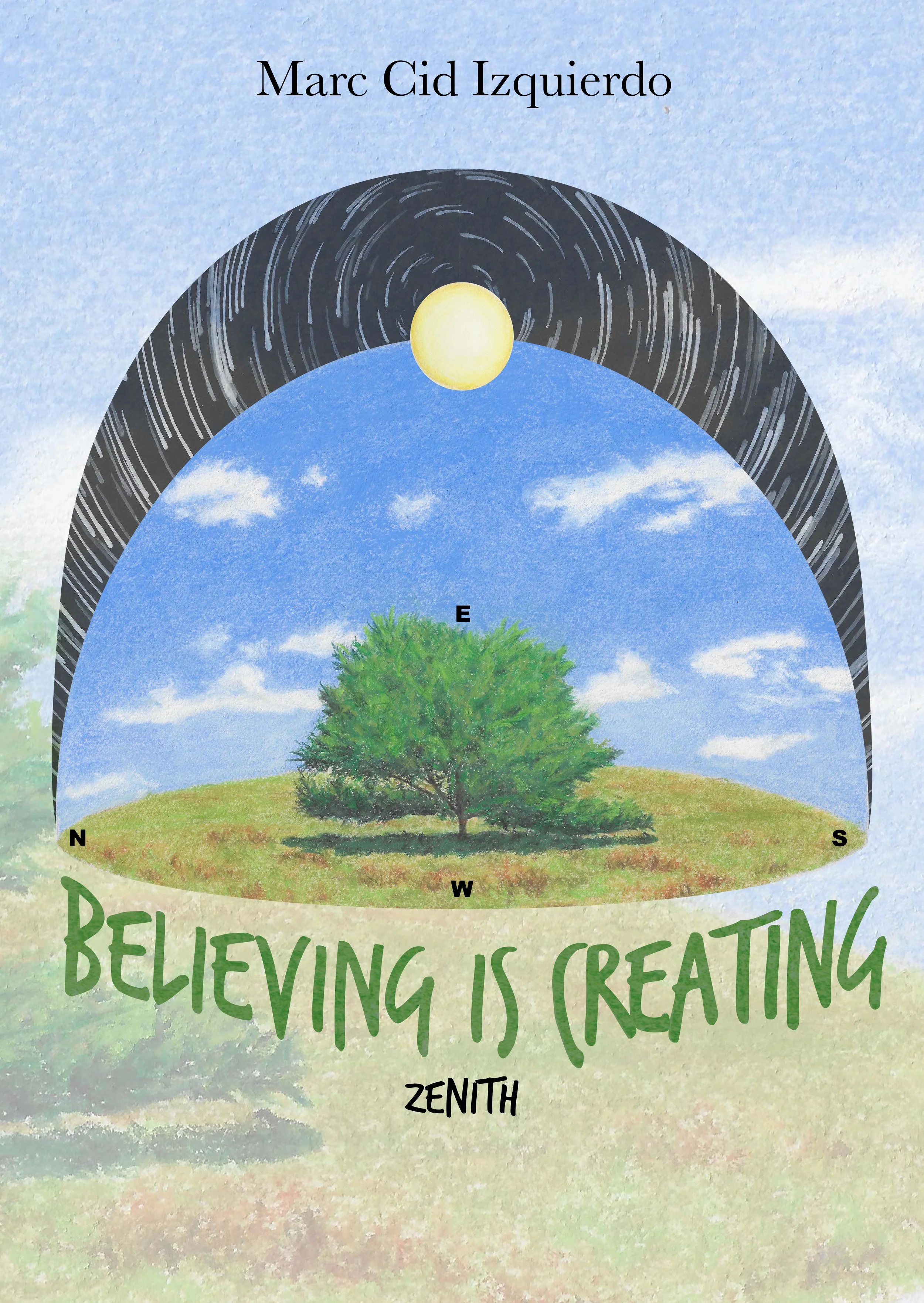
Believing is Creating is not a conventional novel. It is a narrative pilgrimage through fiction, theatre, essay and documentary.
The work unfolds across three narrative arcs. In The Legacy of the Soul, someone listens to a mysterious recording in which a voice reconstructs a series of events beginning with a letter written by Edward. In Once Upon a Time There Was a Soul, Ariadna enrols her son Gabriel in a school radically different from any educational model she has ever encountered, yet strangely similar to the education she had always wished for him. There, she meets the Doctor and Daphne, two figures who appear to know something that neither she nor the reader yet understands. In Always Together, the story of Angel and Miguel allows us to experience, from within their friendship, the social criteria that shape our identity, our relationships and the way we interpret the world.
But within these three stories lies a hidden fourth narrative. After certain scenes, documented revelations connect what the characters have experienced with history, philosophy, psychology, mythology, religion…
Written as a stage play and constructed with the depth of documentary research, this philosophical novel does not separate fiction from knowledge: first, it allows the reader to experience a truth; then, it reveals the invisible structures that were already operating within it. This is not merely a story to be read. It is a journey through the beliefs that construct our perception of reality.
“Will the world ever know what is really going on here?”
Edward Schweitzer - The Legacy of the Soul