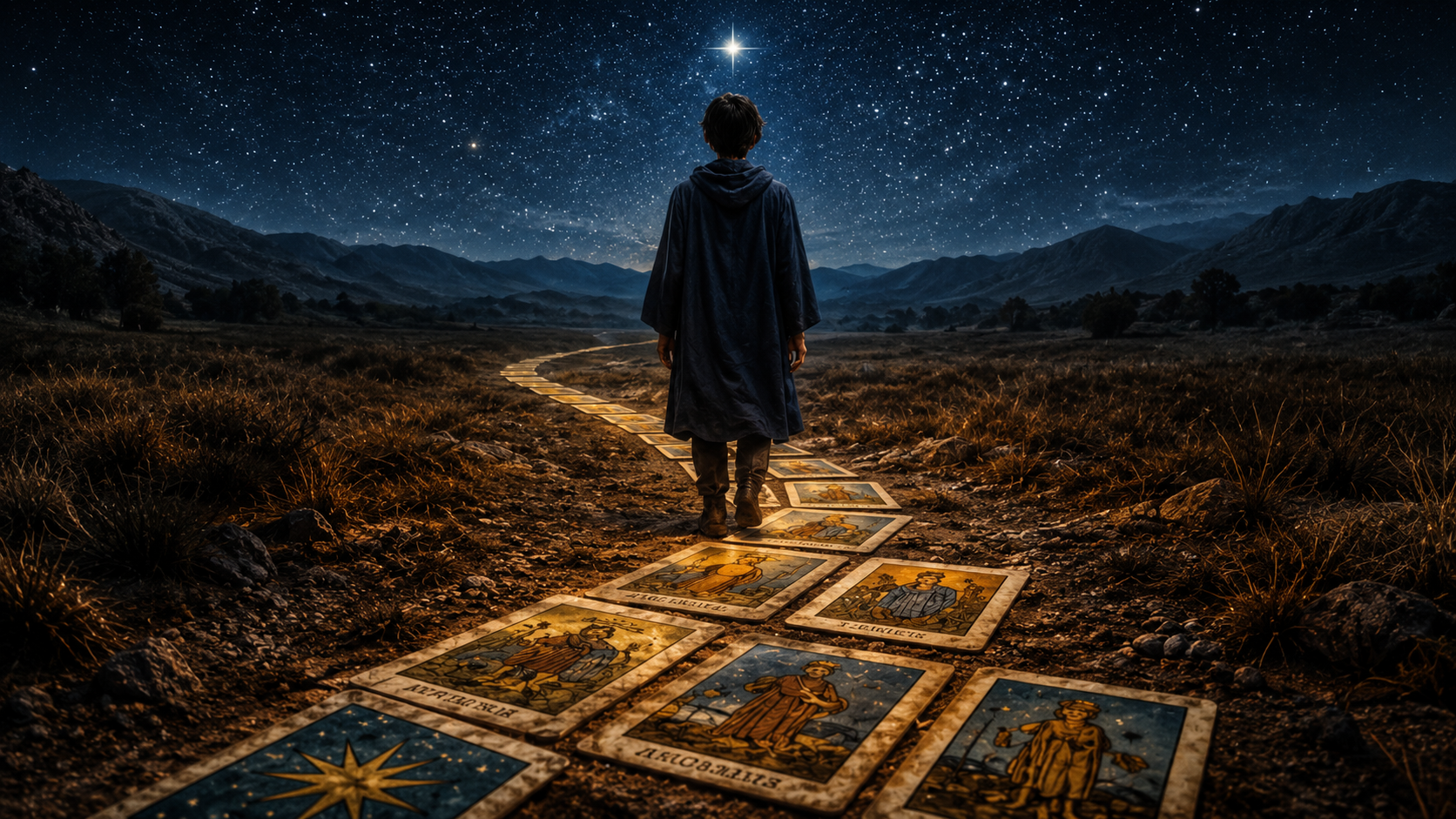
The Path Towards Self-Knowledge (The Symbolic Language of the Unconscious)
Tarot is a deck of cards rich in symbolism, which can be used both for play and for the prediction of the future. As with all divinatory sciences or ancestral forms of knowledge, its origin is mysterious and, at the same time, uncertain to date, since it is marked by numerous conjectures, none of which is capable of establishing a definitive beginning due to the scarce evidence that has reached us. Many writers and researchers of this art point to ancient Egypt as the origin of tarot. This idea emerged from the French scholar Antoine Court de Gébelin, a student of tarot, who recounted in 1781 that he had experienced a dream in which he found himself inside the temple of the Sphinx in Egypt, surrounded by tarot cards painted on the walls. However, he was unable to provide any evidence to corroborate this vision. Other scholars suggest that the origin of tarot cards lies in the East and that they reached Europe through Jewish Kabbalists in the city of Fez around the year 200 BC. Another school of thought claims that tarot emerged during the Middle Ages. The truth is that many of these interpretations arise from the idea that the symbols contained within the cards reveal influences as varied as Greek rites, Gnosticism, Neoplatonism, Hermetic teachings, ancient Arab and Indian philosophies, as well as elements drawn from the Cathars, Jewish Kabbalah and Mazdeism. The oldest known deck is the Tarot of Filippo Maria Visconti (1412–1447), while the most widely recognised, without doubt, is the Tarot of Marseille, composed of 22 Major Arcana and 56 Minor Arcana (15th century). Numerous indications suggest that tarot predates playing cards and that both are closely related. Playing cards spread throughout Europe long before the fifteenth century. However, it is well known that during the Middle Ages, when Christianity activated what we now know as the Holy Inquisition, numerous campaigns were carried out to eradicate any belief that did not conform to the imposed doctrine, along with all its associated instruments. During this period, humanity and history itself -ourselves- were subjected in a dictatorial manner to ecclesiastical power, which erased and burned all writings or evidence deemed pagan, together with all those who adhered to such beliefs. For this reason, it is extremely difficult to assign tarot a precise origin, since its authentic beginnings have most likely been erased from the physical plane.
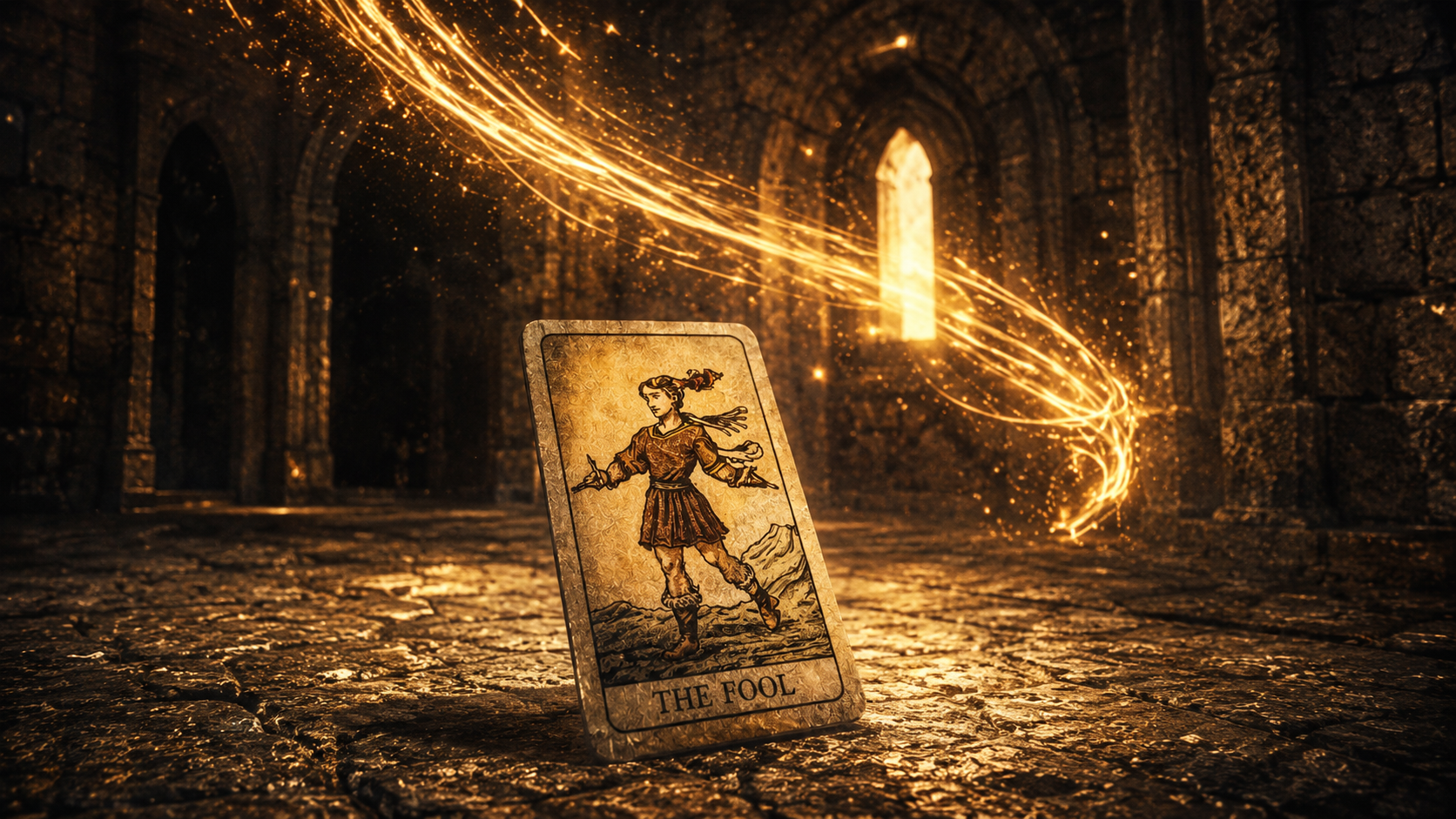
Tarot consists of 78 cards divided into Major Arcana and Minor Arcana, which may be used together or separately in readings. The Major Arcana comprise 22 cards representing the path of consciousness within the Tree of Life. These arcana are also, in part, projections of the unconscious. From a psychological perspective, this process allows us to encounter characteristics, deficiencies and potentials in people, objects or events that occur around us. The 22 Major Arcana represent each of the stages and transitions of this individual and archetypal journey towards self-knowledge and understanding of the world that surrounds us. The Swiss doctor Carl Gustav Jung showed deep interest in archetypal study, recognising in it a profound root connected to the primordial models of the collective unconscious. This interpretative key can grant access to heightened states of consciousness, expanding human perception. In this way, tarot cards become a map of both the personal unconscious and the collective unconscious, enabling a journey towards self-realisation and the acquisition of knowledge about ourselves and the history of humankind. Dr G. Jung stated:
“It is fear of the unconscious psyche that not only prevents self-knowledge, but also constitutes the greatest obstacle to a broader understanding and to the knowledge of psychology.”
The 22 Major Arcana: 0. The Fool: Symbolises the inner child. 1. The Magician: Symbolises the connection from earth to heaven. 2. The High Priestess: Symbolises intuition. 3. The Empress: Symbolises nature. 4. The Emperor: Symbolises wisdom born of experience. 5. The Hierophant: Symbolises the word. 6. The Lovers: Symbolises human integration. 7. The Chariot: Symbolises values and the direction of impulse. 8. Strength: Symbolises the power gained through surrender. 9. The Hermit: Symbolises solitude and the productivity it brings. 10. The Wheel of Fortune: Symbolises rebirth. 11. Justice: Symbolises good —what is beneficial for ourselves and for others. 12. The Hanged Man: Symbolises doubt and resistance. 13. Death: Symbolises transformation. 14. Temperance: Symbolises self-knowledge. 15. The Devil: Symbolises enslavement to lust and materialism. 16. The Tower: Symbolises profound change towards inner truth. 17. The Star: Symbolises inner power. 18. The Moon: Symbolises the invisible. 19. The Sun: Symbolises the visible. 20. Judgement: Symbolises awareness of oneself. 21. The World: Symbolises integration into one’s timeless personal nature
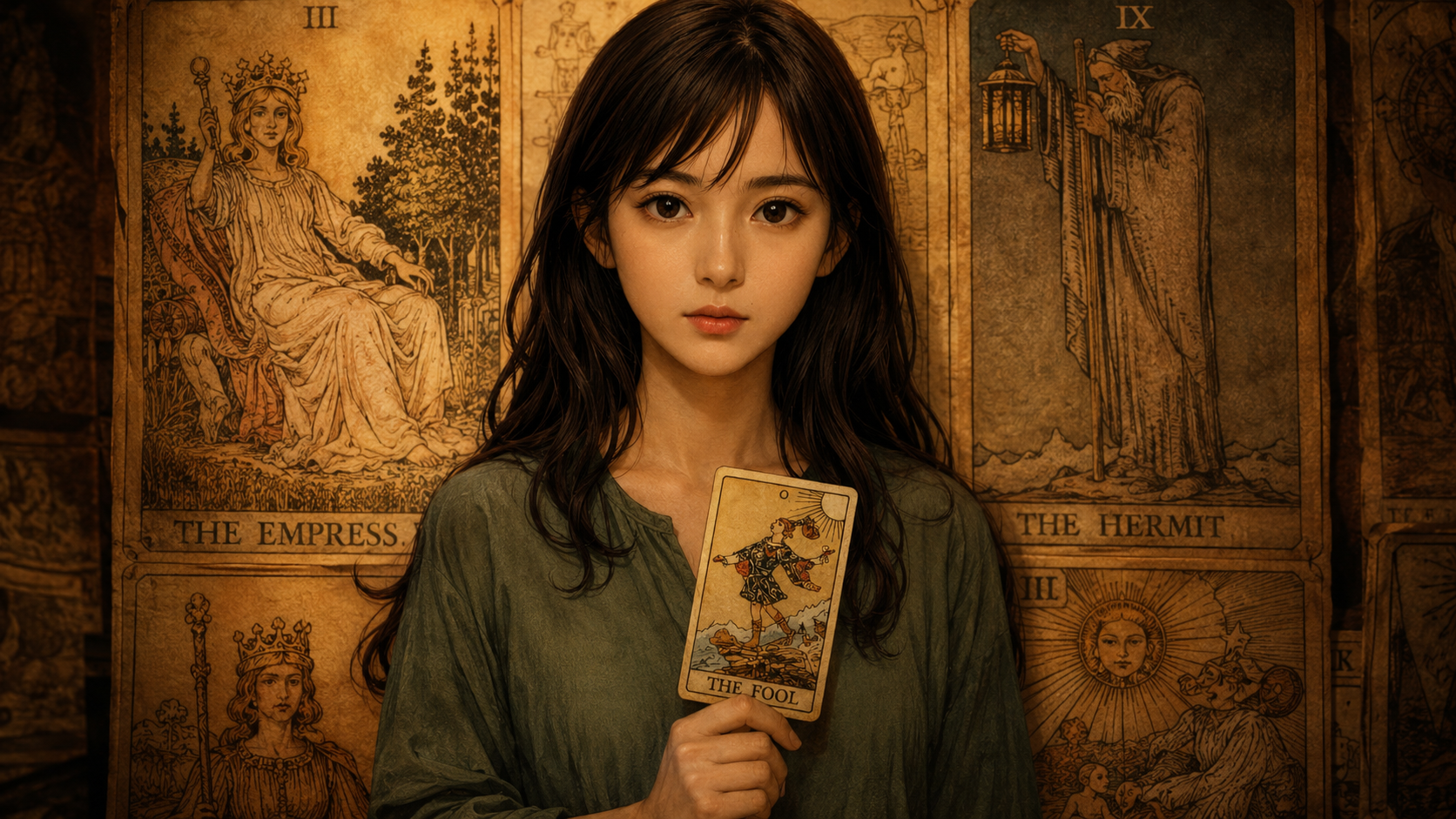
The Minor Arcana consist of 56 cards divided into four paths, each symbolised by Swords, Pentacles, Wands and Cups. All suits contain a sequence of numbered cards from the Ace -one- to nine, plus four court cards: the Queen, the King, the Knight or Prince, and a young figure known as the Page -the infant-, which together form a sequence of fourteen cards. Based on these archetypes, it is believed that the court figures represented a well-to-do medieval family or a royal couple accompanied by a knight and a servant. There are numerous interpretations regarding what these cards were originally associated with. For instance, it was believed that the four suits -Coins, Swords, Cups and Wands- derived from the four sacred objects of the legends of the Holy Grail: the sword, the pentacle -or five-pointed star-, the lance and the cup. Traditionally, however, they were also considered to represent the four symbols that the prophet Ezekiel referred to as the four creatures of the Apocalypse: the lion, the bull, the eagle and the angel -the human being-. The alchemists of the Middle Ages equated them with the four elements -fire, earth, air and water- and with the four seasons -summer, spring, autumn and winter-. Modern scholars affirm that the symbolic structure of the tarot derives from the four social classes: Cups as a symbol of the Church and the aristocracy; Coins of merchants and traders; Swords of warriors; and Wands of peasants and landowners.
An Irish myth recounts that there once existed a race of demigods known as the Tuatha de Dannan, who came from the northern lands and brought with them four sacred objects: the Stone of Destiny -Coins-, the magical cauldron -Cups-, the Sword of Power -Swordsand the sacred spear -Wands-.
Coins: Symbolise abundance, fortune, money and success in business. Summer. Earth element. South. Swords: Symbolise problems, obstacles, conflict and oppression; sorrow, struggle, disputes, misunderstandings, strength and authoritarian order. Autumn. Air element. East. Cups: Symbolise love, happiness, friendship, creativity, ideals, fertility and intellectuality. Winter. Water element. North. Wands: Symbolise work, intelligence, professional success and projects. Spring. Fire element. West.
Tarot does nothing more than describe the phases or movements in the life of every human being. Just as the sun and the stars have their own movements within their cosmic wheel, human beings also possess a wheel of consciousness. To walk the four paths -to master the four elements- the physical, the energetic, the emotional and the mental, opens a new route -that of the Major Arcana- the path of the fifth element, that of the spirit -the soul-, the final path towards true self-knowledge.