The Celestial Guardians (The Birth of the Cosmic Order)
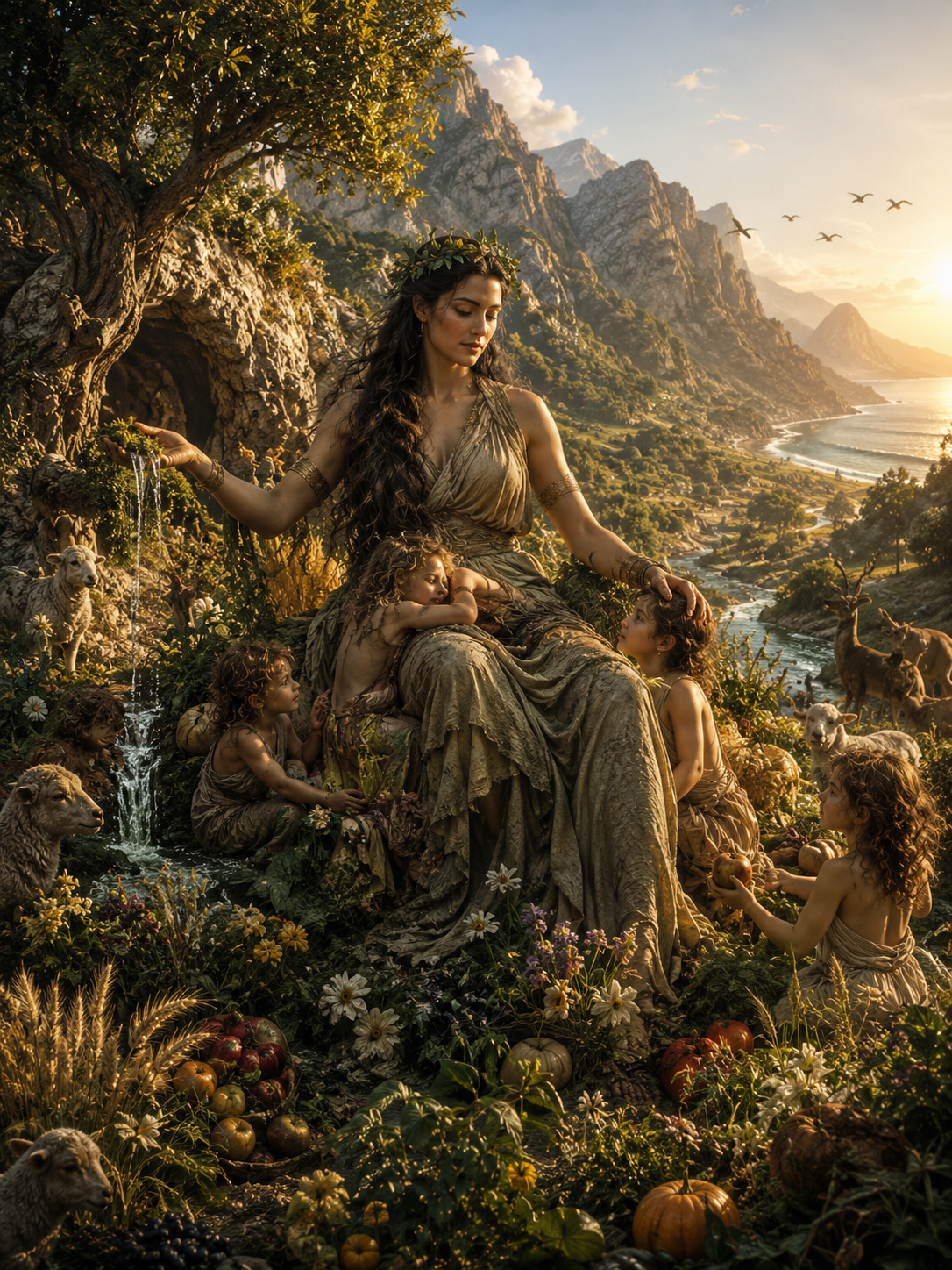
The ancient Greeks believed that the goddess of Mother Earth -Geographia: waters, solid land, caves, etc.-, Gaia, was kind and generous, giving life and nourishment to all her children, and she had countless of them. From the union of Gaia and Uranus, god of the starry sky -the belt of the constellations, the fixed stars-, a family of gods was born, known as the Titans. Oceanus was the Titan god of the great oceanic river that encircled the world, and Tethys was his sister and consort. The Titan Hyperion was the first god of the sun, and his sister and consort was Theia. Also among them were Coeus and Phoebe, Cronus and Rhea, Crius, Iapetus, Themis, goddess of justice, and Mnemosyne, goddess of memory. These were the twelve primordial Titans born of Gaia, yet from her womb were also born the hundred-handed giants and the one-eyed Cyclopes. But Uranus did not allow his children -luminaries of the night- to see the light of day, for he feared the power they might possess. He knew well the history of his lineage: the overthrow of Chaos by his son Erebus, and in turn, his own overthrow at the hands of his children -Uranus himself-. Despite ruling the totality of the heavens, his sons and daughters were forced to remain beneath the earth, chained in the dark cavern of Tartarus. Gaia grew angry with Uranus and urged her children to conspire against him. The youngest of them, Saturn, attacked and castrated Uranus with a sickle; afterwards, he took the severed genitals and cast them into the ocean -there a whirl of foam was formed, from which Aphrodite/Venus emerged, goddess of beauty and love-. He then proclaimed himself ruler of the world.
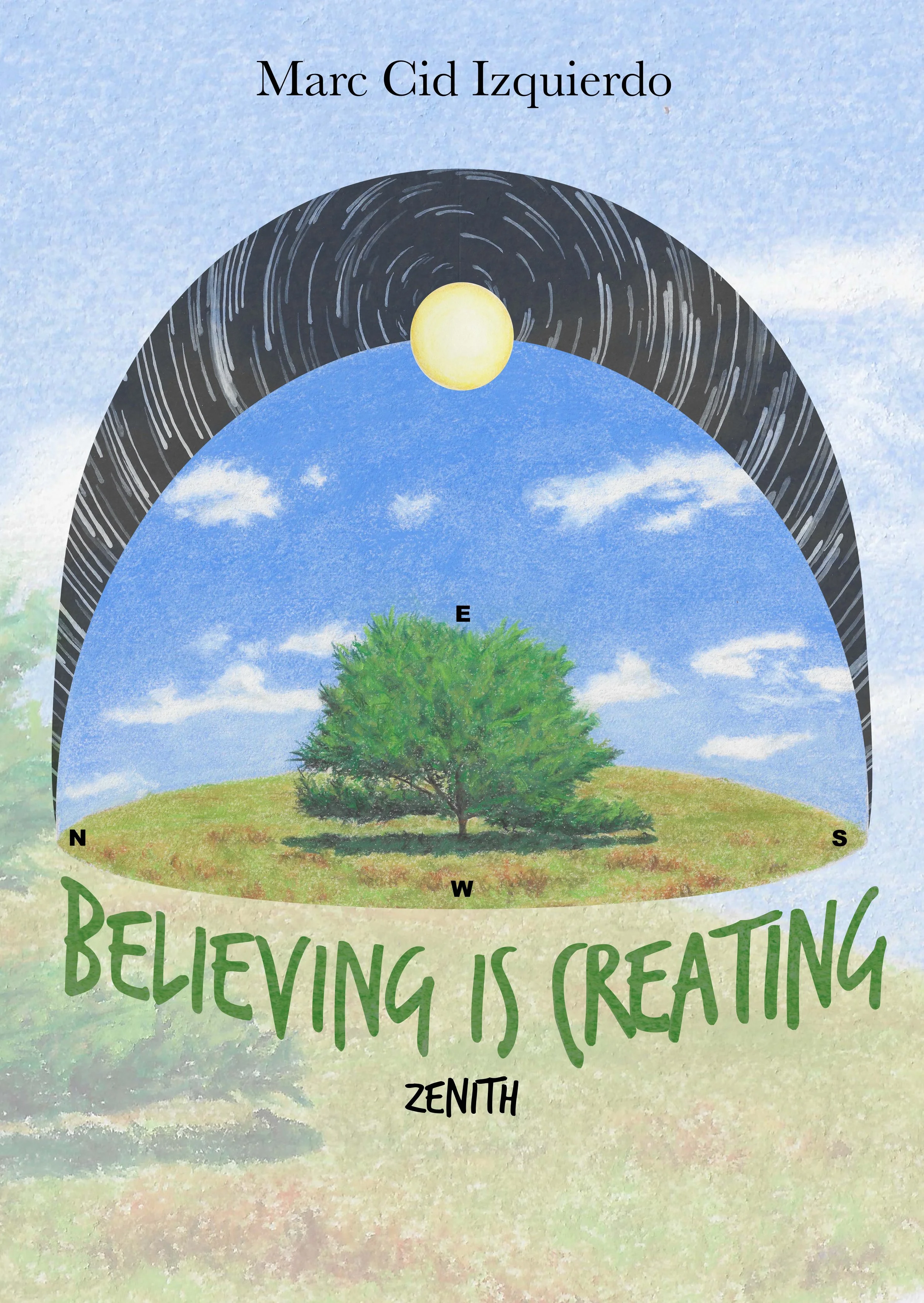
Saturn became a fearful king, as his father had been, for Gaia warned him that one of his own children would overthrow him just as he had overthrown his father. Cronus united with Rhea, and from them were born three sons: Poseidon, Hades, and Zeus; and three daughters: Vesta, Hera, and Demeter. As each was born, Cronus devoured them, leaving them trapped within Saturn’s stomach, isolated and powerless -as the furthest wandering star visible from firm ground, taking approximately twenty-nine years to complete a full orbit around the Sun (the slowest of all, hence he is represented as an old man), it implies that from his position all other celestial orbits can be observed (including those of the Sun and the Moon, according to Greco-Roman cosmology), devouring their movements and trajectories, that is, governing their lives-. Rhea, just as Gaia had done in her time, decided to intervene to prevent him from continuing to devour his children. When she was about to give birth to her youngest son, Zeus, she hid a large stone in the bed; when the child was born and Saturn came searching, she handed him the stone instead. Cronus swallowed it in one gulp, failing to realise the deception. Thus Rhea managed to hide her son among lesser deities, where he could remain safe. Once Jupiter was strong enough, he returned to his father and forced him to vomit up all his siblings who had been captive in his stomach, and he proclaimed himself father of the gods -when Jupiter overtakes Saturn in the race for the throne of the heavens-. According to Greco-Roman cosmology, the fixed stars are held in the firmament -the final heaven or celestial vault-, while the wandering ones lie below, in what we understand as space and modernity, and beneath them the luminaries of day and night, sharing dominion with his brothers Poseidon and Hades, as well as marrying his sister Hera. Saturn was expelled from the home of the gods, and despite having been the worst of fathers to his own children, he behaved as a generous ruler towards humanity.
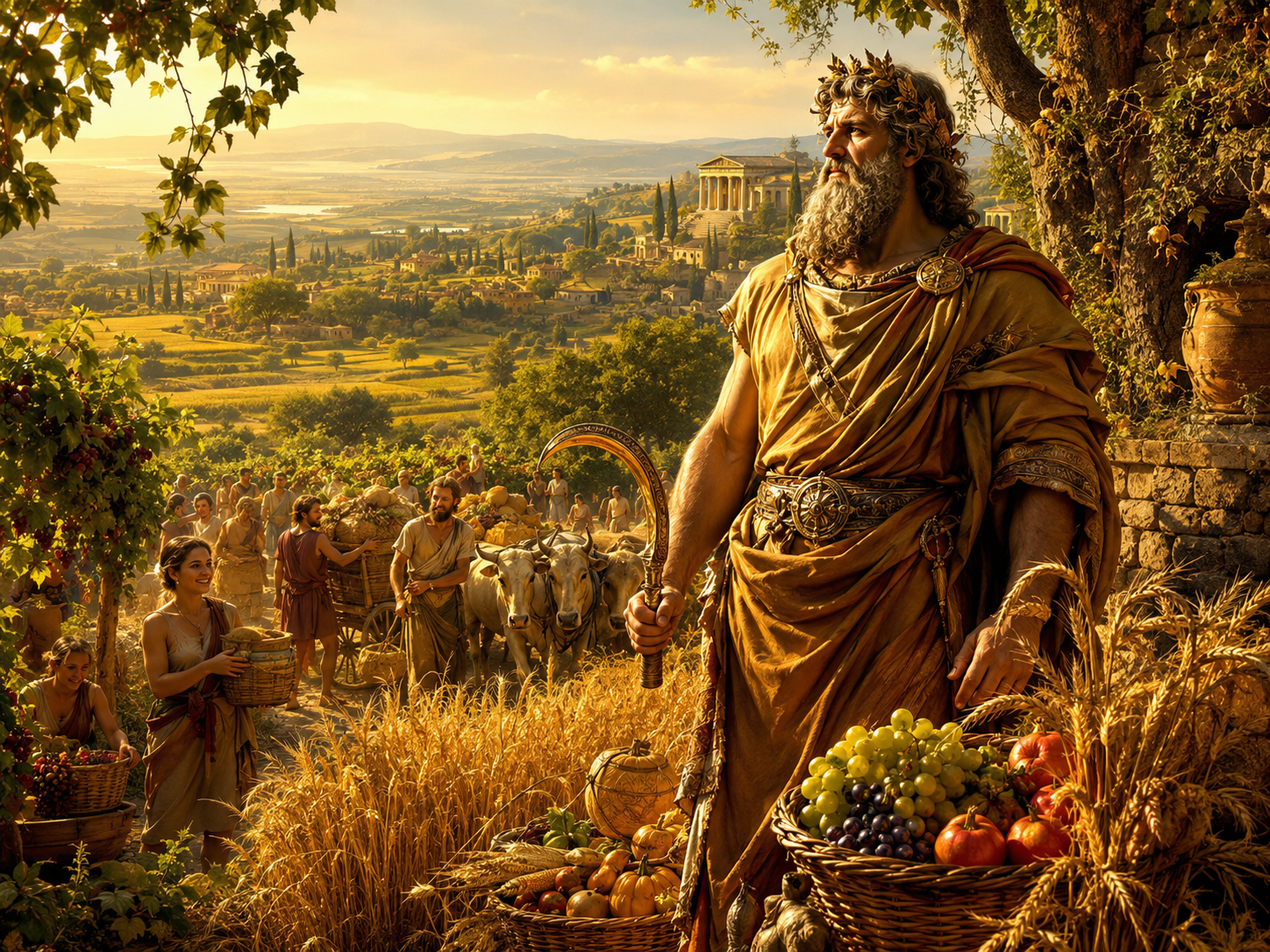
The age of Saturn is known as the Golden Age of civilised man, when sowing yielded double the produce, and human beings were unaware of crime or murder, living peacefully in community -thanks to a stable state of law and political governance-. Human peoples welcomed Saturn during his exile, and through his teachings, peoples such as Rome came to be founded. These teachings included the rhythms of sowing and harvesting through the precision of the equinoxes and the understanding of the vernal point. Thus, festivals were dedicated to this sowing god, known as the Saturnalia -in Greece they were known as Kronia, from Kronos-.