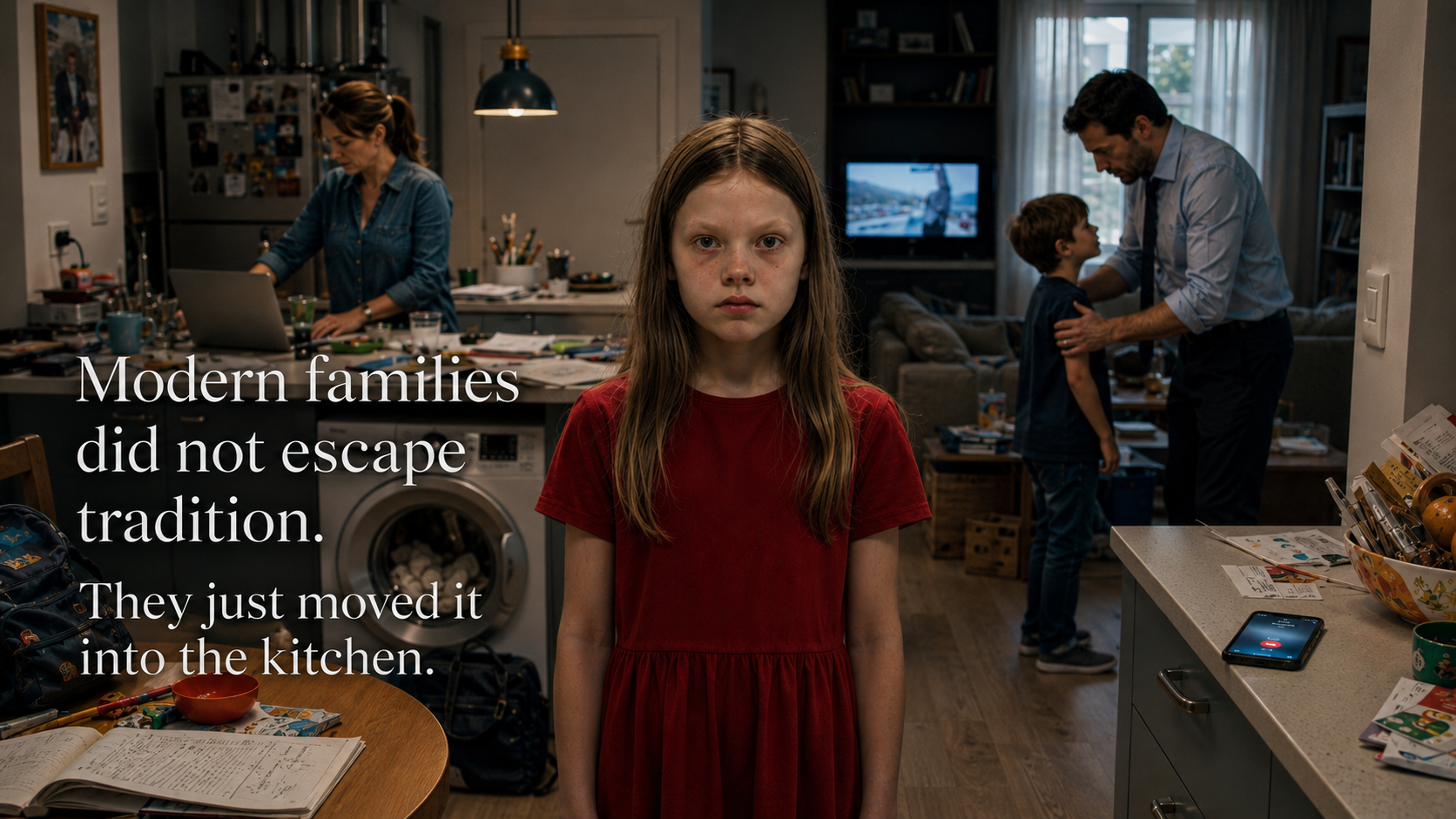
How your relationship with your parents shapes your identity.
Our relationship with the father is linked to our understanding of the masculine. The father becomes the masculine reference for his children. Thus, if the father was absent in the family environment, whether due to work or abandonment, masculine energy will be perceived as something external, distant, detached and occupied. On the other hand, if the paternal reference was someone attentive, intelligent and successful, the perception of masculinity will be one of something powerful. If the masculine abused or repressed, you will probably form an idea of masculinity associated with aggression or violence. Whoever that reference may be -the father who cared for you, the grandfather who abused, the tutor or family member who inspired you, the one you fell in love with, etc.- the man who acts as reference -the man of the Status Quo himself- will represent your idea of masculinity. Since we live in a patriarchal society -apparently- the relationship we have with the masculine will affect our profession or our social and leisure expression. Since it was our mother who gave birth to us -the matriarch- who nourished us and kept us alive, our father will be the one who indoctrinates us and prepares us for the world out there -so that we may continue living-. Inside, we are protected by our mother; she protects us, understands us, she knows what we need. With her, we have everything we need.

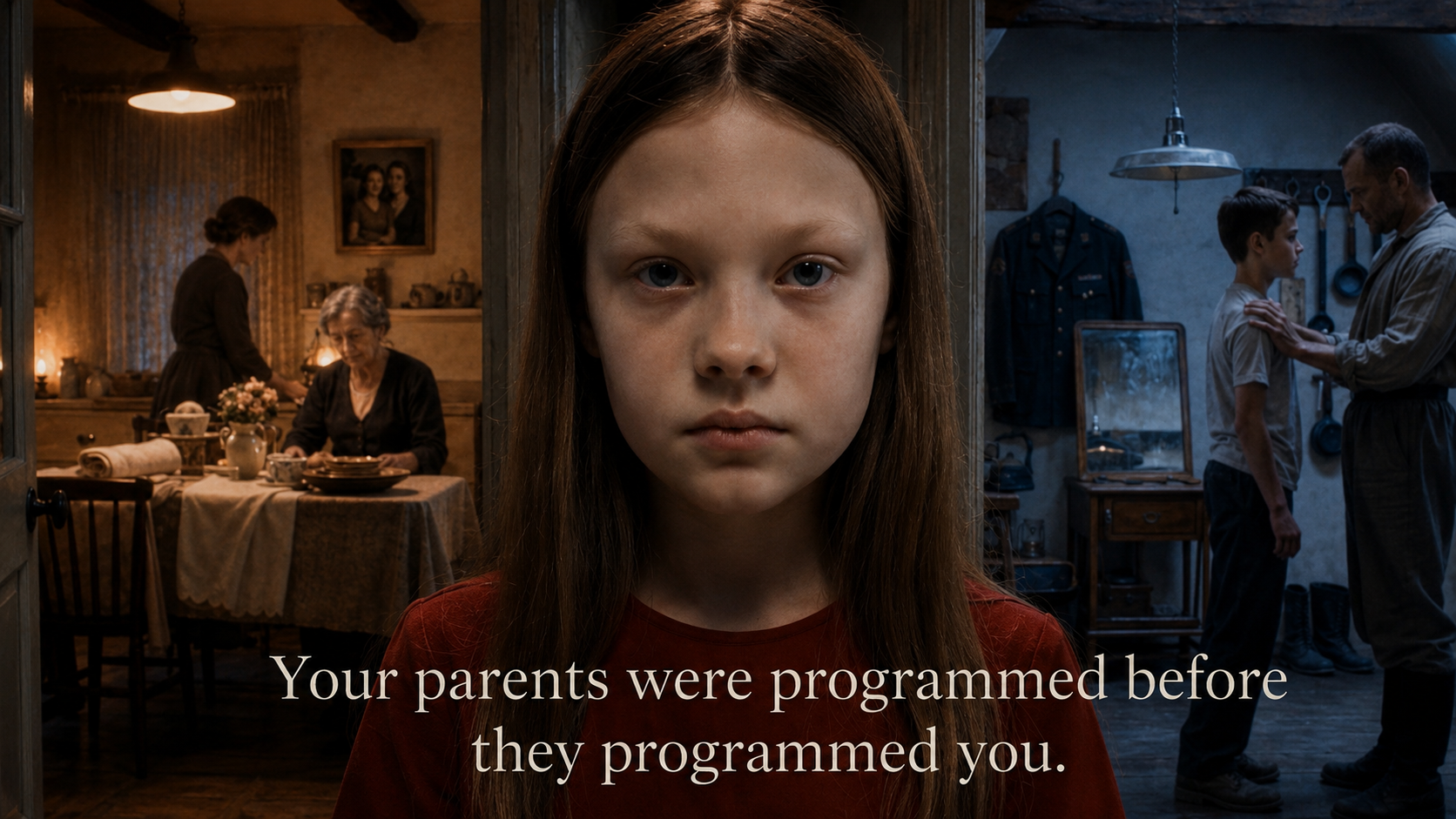
Therefore, it does not matter what relationship you have with your father or your mother; it does not matter what happened to them, or what is happening between you. Your relationship has also been programmed. Your mother was told that she was a woman, and that a woman had to be responsible from the moment she was a child -because menstruation appears at an early age-. She was told that she had to be responsible for the household, because that is what women do. She would see it in her mother, in her grandmothers/aunts, in the news and films, in advertising, in leisure and social life, until she finally had no choice but to accept it. She had to prepare herself, because one day she would be a mother and would have to be responsible for an entire household. The reward: to raise and bring children into the world, and to form a family, her own, where she would lead -because, of course, her mother led in their home.-. You deserve it, you have earned it. Your father was told that he was a man, and that a man had to be strong and brave from the moment he was a child. He was told that crying or showing his emotions was something for children and girls, because boys are weak and cowardly -vulnerable-. He was told that, in order to be the leader of a family, he had to be successful and respected. Therefore, he had to work, regardless of how hard or demanding the job was. He was a man, and he had a family to support. He was not meant to be responsible for the household, since that was the role of women. He was not meant to be responsible for his children, because children belong to women. Without realising the inherent contradiction in that statement. If children belong to women, then men, as children of women, belong to women. He was told to focus on work and to forget about the heart. The reward: he was the bearer of the seed, he was the bloody boss, he was the one who went to war and worked hard so that women could have their homes and raise their children. Once done, once the seed was placed, all that remained was to work, and to keep placing seeds.
The father could become dispensable for our survival, as mothers have become fathers, because they have taken on all responsibility. Since they not only wanted to raise children and manage households, they also wanted to work and be successful. Since man, genetically, cannot give birth, and the woman has begun to work because she is responsible, man has begun to take interest in raising children and household matters. But they have not been prepared for it; they do not have a visible, canonised space, as it contradicts the first rule of what it means to be a man -sensitivity-. In this way, many have ended up going mad, fleeing their homes or being cast aside. Feminine force has been hidden, imprisoned within a house called home. There, one can be safe, feel loved and express love. Out there, an irresponsible masculine force prevails, desperately seeking success as a means of survival.