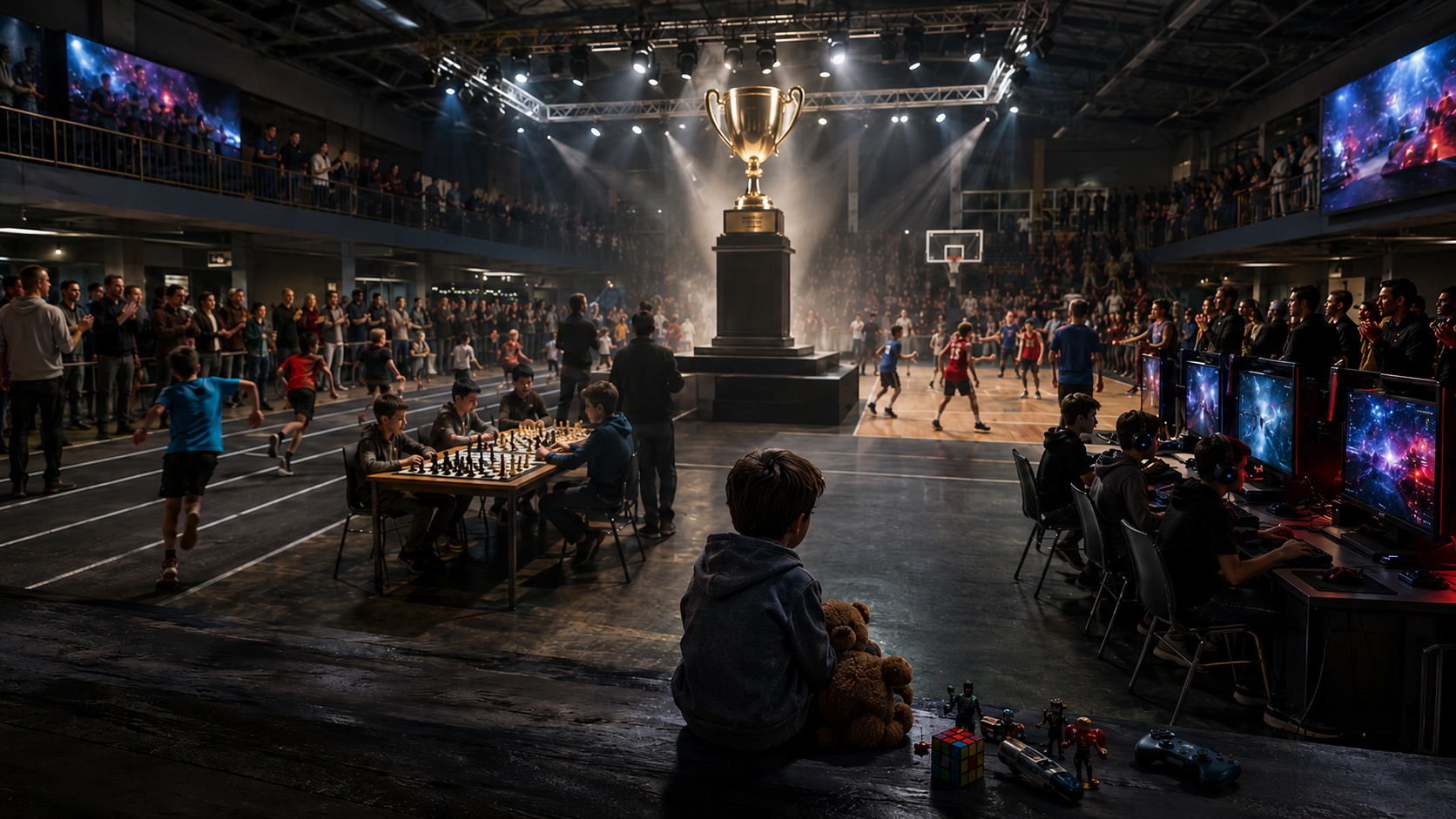
The Trap of Victory (The Worship of the Winner)
What are board games really about? Board games are based on strategy -logic or reasoning-, skill -memory, manual dexterity or deductive ability- and chance. They claim to be fun. But are they really? There is no game that is fun if one of the parties is not satisfied. In a game, all parties must enjoy themselves, from the beginning to the end. If one of them ends up hurt, sad and/or dissatisfied, then we are not facing a game, but a regulated competition based on fictional rules. The strategist, the skilled player and chance will determine the outcome of the battle. A winner and a loser. Then comes the magical phrase of the strategist and the skilled player, the winner: You have to know how to lose. How can it be that fun is linked to competition? How can someone enjoy themselves watching others suffer? Because it is the prize of the winner. Laughing at the loser, for losing.
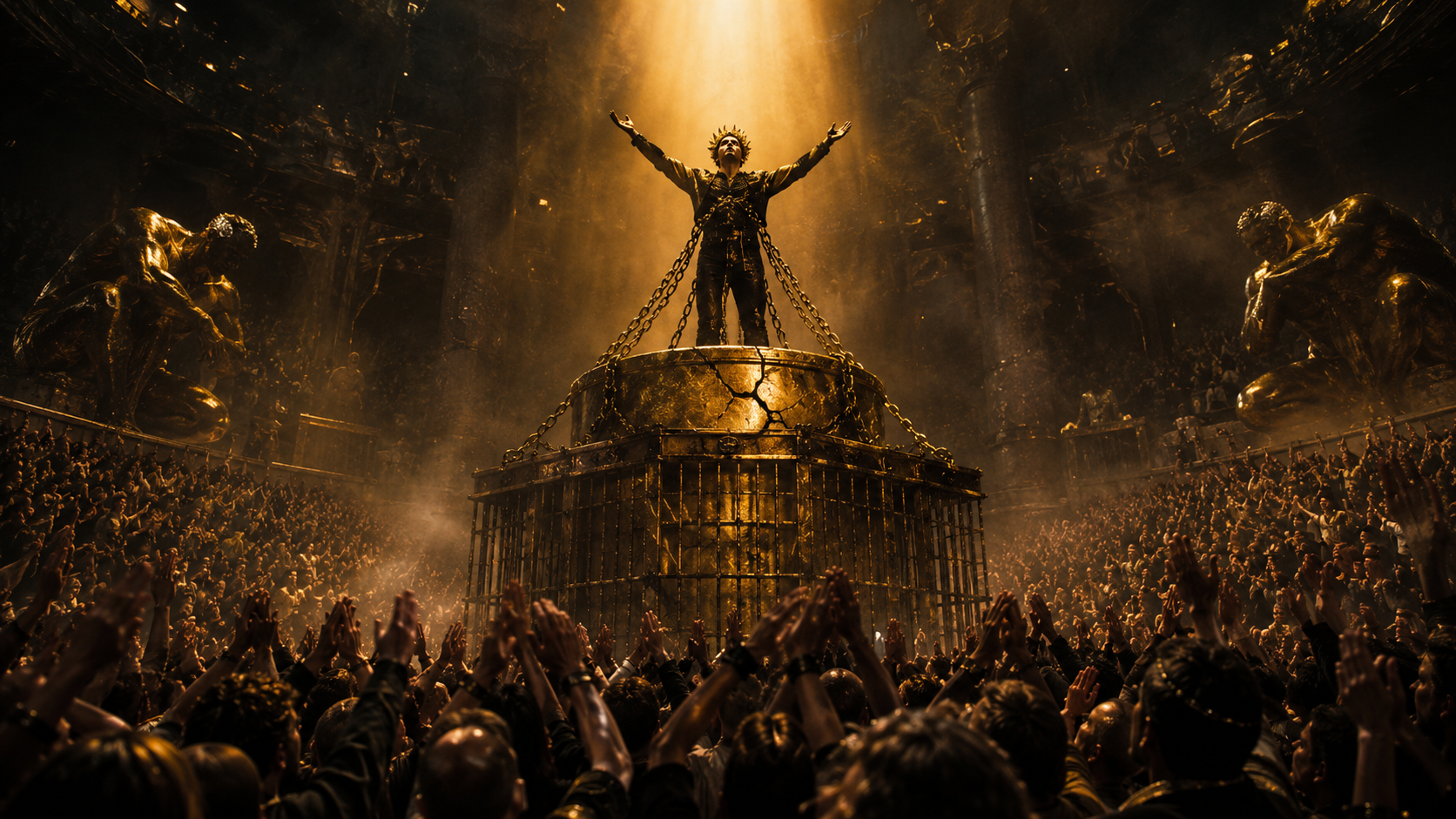
Why are games distributed with a competitive mindset? By now you probably already know what is happening. Board games are nothing more than a product, labelled as playful -of entertainment-, designed to educate the mindset, mainly among the youngest. Because board games for adults have been corporately monetised. That is, you play for money. What a novelty, eh? Because it is great fun to win money. It is the most fun when you are an adult. The fervour of winning money. But what is the origin of board games? In prehistory. Most people believe the world began yesterday, and sadly that is the norm. That the modern human being created everything. But the made in of the origin of everything lies in prehistory, not modernism. Modernism has only modernised them, made them more stylish and extravagant, with little coloured lights. They have evolved, that is, postindustrialised. But what is the first board game we could identify? The first recorded board game is dice. And what is the engine of all modern board games? Dice. Dice allow the vast majority of board games to function. That is, 7000 years later we are still using dice, but with different settings in which to move. If card games like playing cards were to replace divination games -like tarot cards- something similar would happen with dice. From predicting and guessing events, to randomness in order to compete to win. The absence of competition does not deny challenge or self-improvement, but recognition. Which means being publicly recognised. Action and result from being known above what is known.
These first games were found in the lands of the Fertile Crescent and cradle of civilisation -Mesopotamia-. These games apparently had a simple dynamic, based on chance. These dice were not like today’s. They were made in pieces of different shapes and materials -flattened bones, stones, wooden pieces, turtle shells-. The oldest board game -with a board- dates back to 5000 BC and appeared in the burial mound of Basur Höyük, near the Turkish city of Siirt in 2018. Forty-nine carved stones were found there, in simple shapes -spherical, pyramidal, oblong- or more elaborate -dogs and boars- and with paint -white, red, blue, green-. The discoverer compared it to an ancient form of chess.
«There are also dice and three circular counters made of a white shell and topped with a round black stone. The pieces of our game appeared together and at the same site. It is a unique find, a fairly complete set that could resemble the game of chess. According to the distribution, shape and number of the stone figures, it seems that the game is based on the number four. archaeologist Haluk Saglamtimur.
Before Baçur Höyük was discovered the oldest board game was thought to be the one found in Egypt: Senet. Apparently, this board game was popularised among pharaohs of the first dynasty -3100 BC-. We can understand Senet as a strategy game in which two players participate. Each player is in possession of five pieces - conical and / or cylindrical - which are placed on the first row of the board -three rows, 10 squares-. The objective is to advance through the board, passing and blocking the adversary until reaching square number 30 –exit-, whoever manages to be the first to pass their chips through the exit square will be the winner. Five of the squares are special -15, 25, 26, 27, 28 and 29-, some give protection against the enemy’s blockade, but others can even make you go back to square number 1 -very similar to the game of the Goose-. Another of the ancient board games found included marbles, such as Mehen’s game.
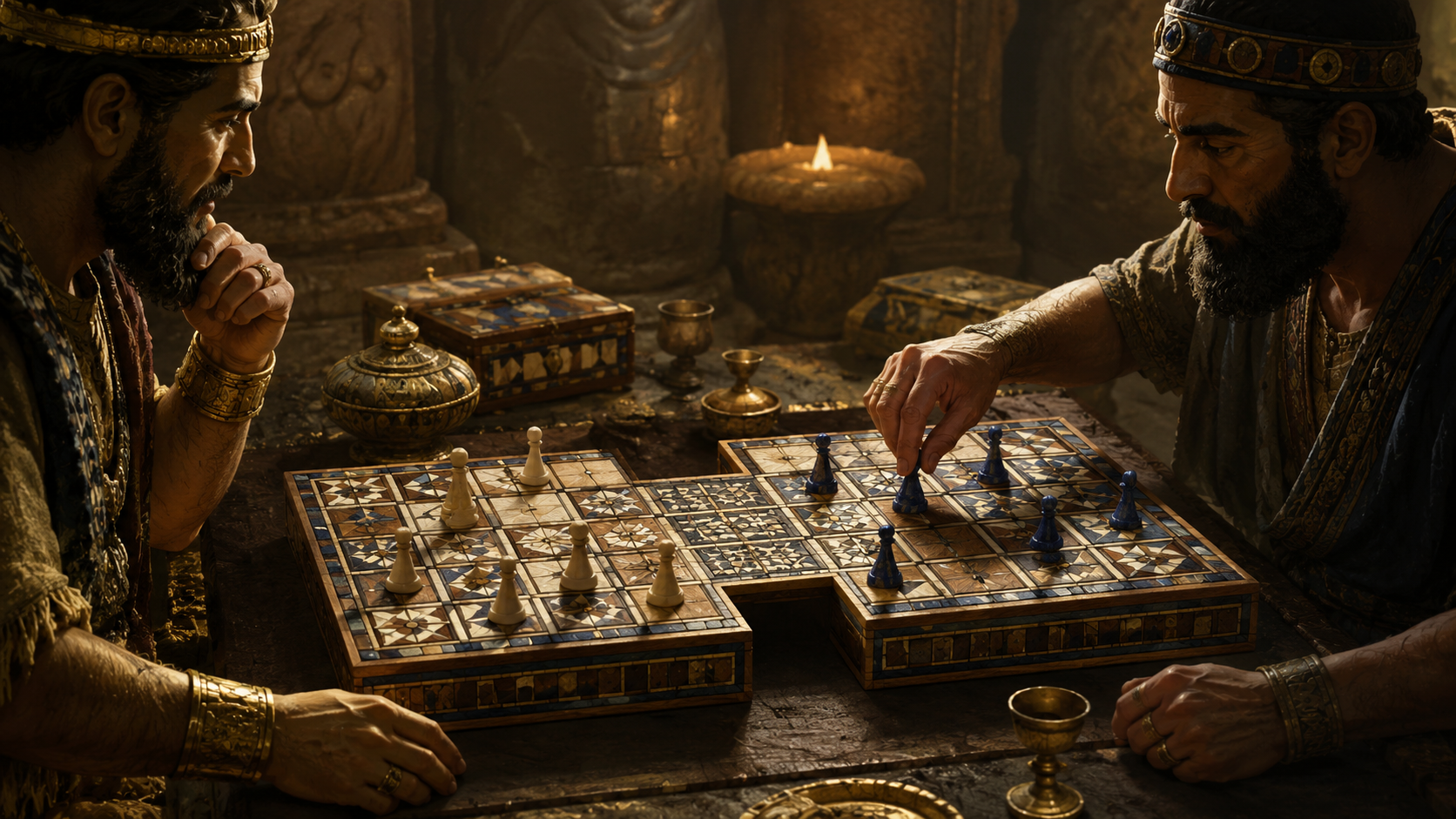
Also, since ancient times, we have the oldest game still being played: The Royal Game of Ur, from 2650 BC. -First dynasty Ur-. We can understand the real game as a race or chase -very similar to Parcheesi or backgammon- between two players. Each player has seven pieces -under a different colour of the rival- and must advance to the goal indicated by the board, some of the squares are special, such as the flower, being in that square the piece is protected from being eaten by another rival piece. Four tetrahedral dice were used - like a pyramid- that marked the roll -zero could be the minimum score and four the maximum-. These are the rules that researcher Irving Finkel deciphered on a cuneiform writing board in the British museum -the actual rules of the game are just guesswork-.
All these ancient games were found next to the body of important characters, as in the tomb of the pharaoh Tutankhamun. One of the primary qualities of these strategic games is the intervention of chance - or divine intervention-. Well, it is the dice that allow the game to progress in one way or another. They will determine the best and worst rolls that will allow the player to advance. Therefore, we could say that chance leads the chips. The winner is by destination, rather than skill. The wise and the ignorant could compete on equal terms. Well, it didn’t matter how skilled you were, if your rolls were weak. The rules were simple, you could win without even knowing how to actually play. The strategy was the here and now. According to the dictionary of the Spanish language, for the word chance or random, they use the word azar, that means: an event that occurs due to luck, which is the absence of skill or calculation. And who is the inventor of luck? The skilled. They weren’t convinced of divine intervention as a resolution to fate - probably due to bad luck-. The etymological origin of the word azar is Arabic -zahr- and its original meaning would be flower. There is a latin saying of having the flower, which is a kind of blessing by something. In the real game of Ur, the flower is a special square, because when the token falls on it, it has protection –it cannot be eliminated-, in addition to granting the player a new roll. It can also be seen in the sculptures of the Sumerian gods how they wear the same symbol - the flower- on their wrists -as if they were watches-. They were the ones who carried the flower, therefore, chance –azar- was a divine power. That only the gods possessed; they determined fate; destiny. Our gods -wise men- wear watches on their wrists, because their power is time. The flower would be the symbol that we understand by luck-clover. In the six-sided dice, the six -maximum value- was represented as a flower -as-.
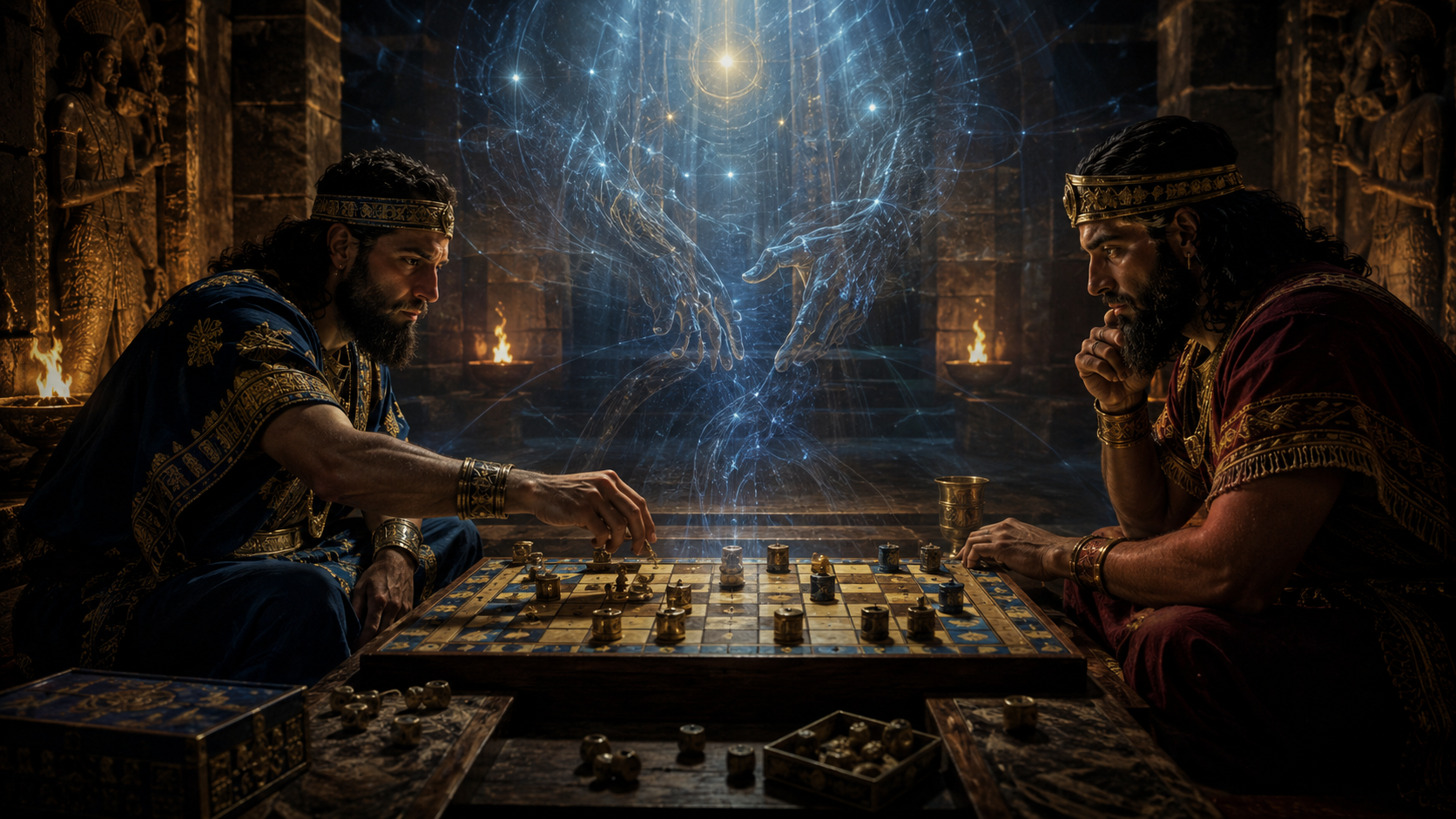
These ancient games were not solved by chance as we understand today –by lottery-, but there was a small deadly intervention –because the token must reach the goal before the rival- which was being conditioned by the divine –fortune- . For mathematicians, luck is a hidden phenomenon - unknown -, although it can be defined, therefore luck would not be accidental, if not causal, the cause would still need to be determined. They study chance according to probability theory, using statistics. That is, by guesswork. Esotericists speak of connection, rather than probability. If you visualised the number or roll you needed, it was created. The truth is that these games test your patience, tolerance and understanding. Therefore, we could say that all these ancient games were created as educational methods, not entertainment. Entertainment is a modern concept, in which it defines those non-essential activities. That is, they are practiced freely. The act of voluntarily keeping your attention fixed on something, with the desire to find pleasure, fun or leisure. Entertainment is related to modern board games, playing them is for fun, they are truly competitive educators. Therefore, in competition is pleasure. Entertain yourself in competing. The more you compete, the more entertaining you are. Obviously, the result is not that, because competition does not produce happiness -fulfilment-, but amplifies stress, greed, anger and arrogance. An illusory happiness.