Competitors and Adversaries (The Manufacture of the Adversary)
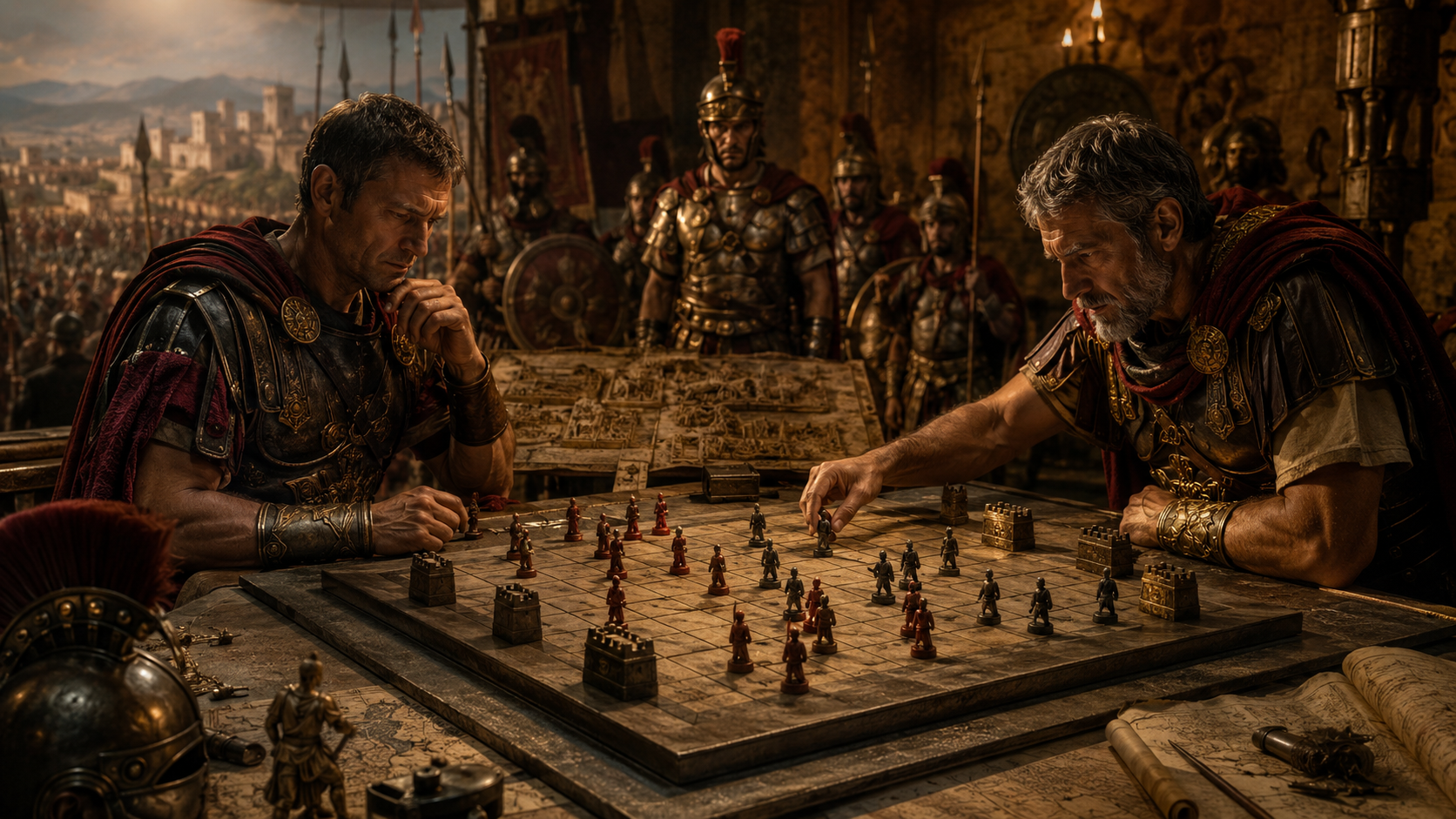
Due to the high number of wars that took place during the Aries era, that is, between 2079 BC and approximately 225 AD, board games acquired a strategic military character that consisted of protecting the city or expelling the enemy, such as the Romans called Ludus Latrunculorum. And others like protecting or capturing the king, in the Germanic games called Tafl or the Hindu game Chaturanga - imported from Japan and China-. All of them would be predecessors of the game that we know as Chess. That would come directly from the Persian game called Shatranj –Sha means king- in 700 AD. The phrase checkmate comes from the Persian sha mat, and its meaning would be king killed. In Spanish it was adapted as acedrex. In the 10th century, the king’s vizier was replaced by the queen, and in the 15th century he acquired all modern skills. Because the queen is the most powerful piece in the game, Chess has been referred to on numerous occasions as the Queen’s Chess. Norms and rules continued to evolve until the introduction of tables in the early 19th century. That is, when it was embodied. Schools and clubs would open. And it would be considered a sport, so the skilled would compete in leagues and championships as professional players. Fate was in your own hands. Victory did not depend on any god. If not a good strategy. The objective of the game of chess is to capture the opponent’s king and at the same time protect yourself from the fact that your own king is not captured by the enemy. For this you will have a capable army. There you will have the rank-and-file soldiers -pawns-, the archers -alfiles-, the cavalry -horses-, the cannons -towers- and Wonder Woman -the queen-. The game consists of planning the best strategy that can knock down your rival. Because you need to create a plan to conquer your enemy, because that’s life.
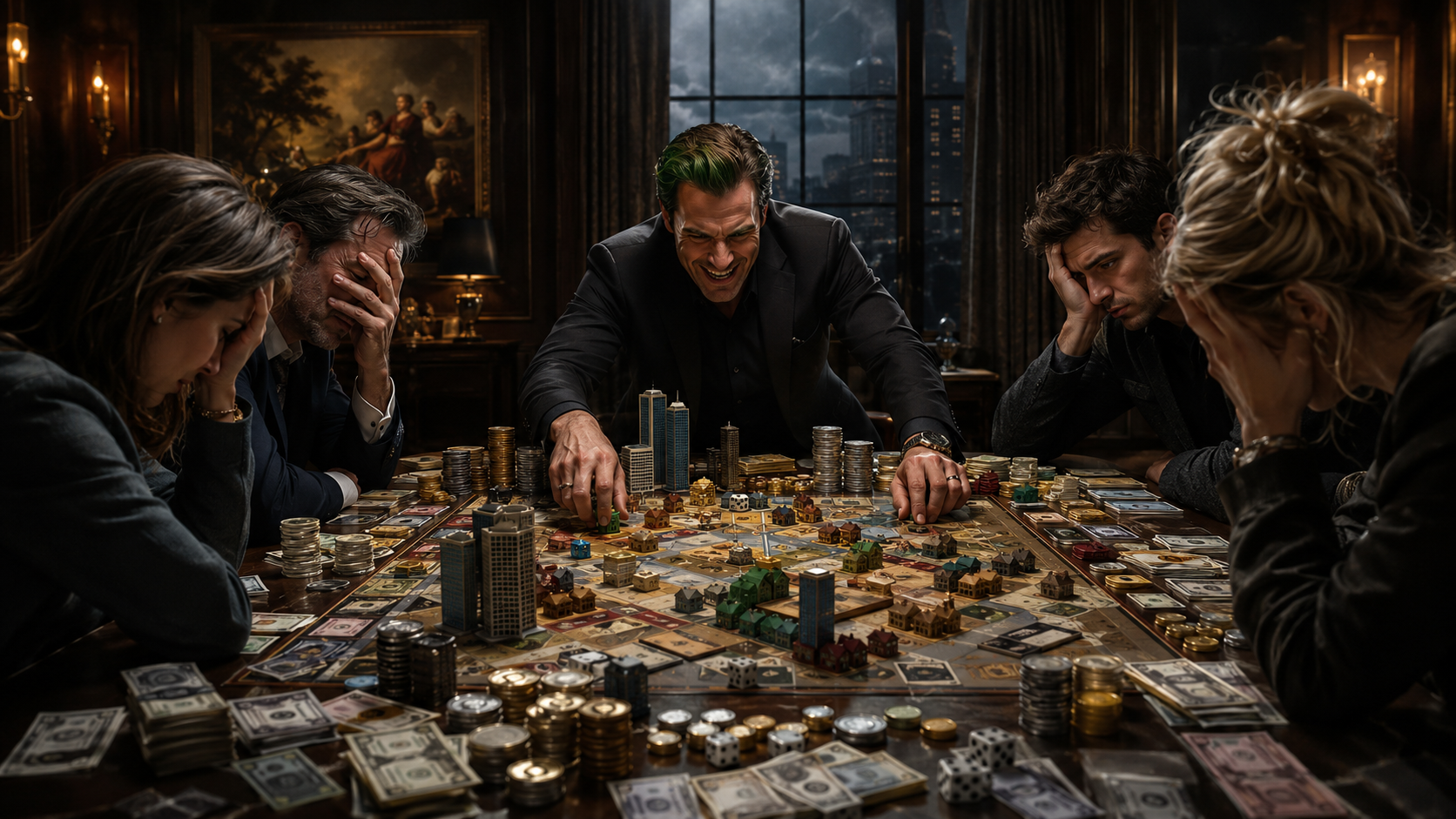
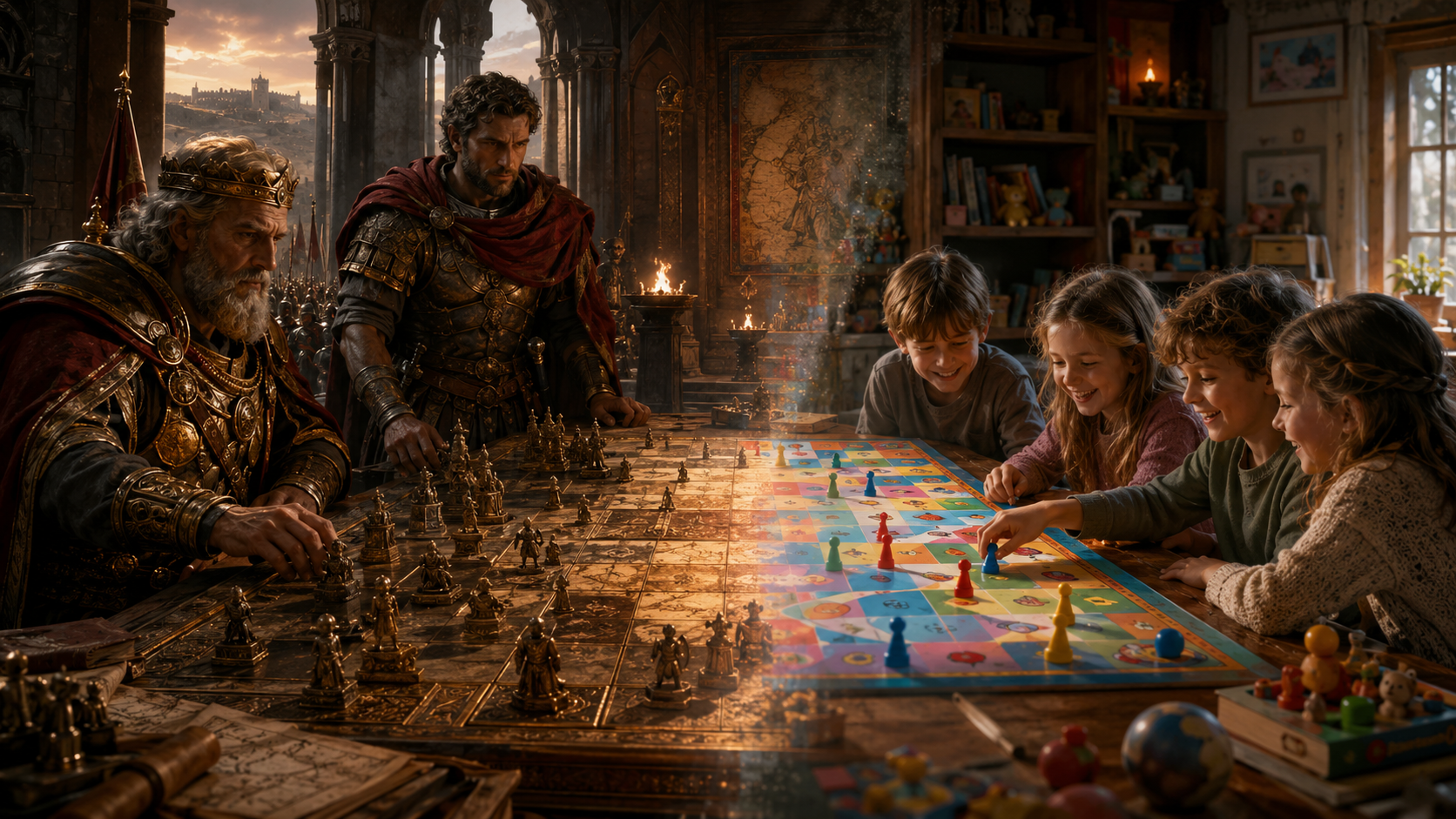
But when did board games stop being games for emperors, kings and generals to be games for children? When they began to be considered entertainment products, that would be the romantic meaning of being distracted from what is not important. So the answer would be: When they had the need to distract society from what really had value. If you look away from something, that thing will cease to exist for you, if you don’t pay attention to it, you cannot get to know it. But that you do not know something, does not mean that it stops acting and existing. In this way came the Landlord’s Game in 1904. This game was created by the American Elisabeth Magie. According to the designer, her idea when creating the game was to demonstrate the effects of economic speculation -rate- and its consequences. This game was the precursor to Monopoly. In it, the designer demonstrated that rents and sales benefited the owners -landlords- and, in turn, harmed the tenants -consumers-. The irony of this is that in 1935 Charles Darrow created his own version of the game called Atlantic City, and later he sold his patent on the game to the multinational company Parker Brothers for the sum of 500 dollars. Parker Brothers marketed it as Monopoly -they also marketed the game Risk or Trivial Pursuit- and by 1999 more than 500 million people in the world would have played, with it being considered in the Guinness book of records. This is how multinational companies or corporations speculate on the creations of others. They steal ideas, which when applied to their financial games, make them millionaires. But they do not steal them, that is frowned upon, if not they buy it, they appropriate it.

And in this way, what our dear Elisabeth Magie wanted when using it as child’s play was that they could acquire the idea and meaning of inequality and that in this way they could grow with it. What our good friend did not know is that she was going to create a generation of economic speculators. Who else was going to stop and play that game? If it were not for obligation, no child would be interested in learning economics freely, which is why more than half of those 500 million players have not finished a game of Monopoly in their life. It’s boring. And it will only work on those small minds that have begun to understand the money game, and want to learn how to make money with it. Monopoly is not an apology for equality, it is a competitive board game to learn how to make money through speculation, which generates inequality. Players do not compete to be equal; they compete to be unequal. That is to say, they are constantly thinking about how to equate themselves with the rival. It is the only way to win. You cannot teach equality, if the prize is inequality. That is called feeding, nurturing the beast. You cannot pretend to teach equality from the competition. It would be like pissing with your pants on. To learn equality, one has to learn to drop one’s pants, that’s called humility. Yes, from humility equality is achieved. Games based on humility? Who eats that? If your pants are pulled down, they will not stain or tear, no one will have to buy a replacement. Let everyone shit themselves and have fun.
Starting in 1978, board games would have their own prizes in Germany: Spiel des Jahres -the board game of the year-. The evaluation criteria are: 1-game concept: originality and playability. 2- Structure of the rules: composition, clarity and understanding. 3- Format: box or board. And 4- the design: functionality and finish. These awards are aimed at promoting quality games on the German market - the greatest exponents-. Prizes like these increased the sale and popularity of games like Catán and Dominion. Strategy games based on colonisation and conquest, on economic growth. Before the arrival of the new millennium, the creators of board games had other jobs, since the economic benefit was not enough to live on, and selling it to a corporation meant making others rich. Then in 2009 Kickstarter appeared, which is a platform or foundation to obtain economic financing, -with music, shows, comics, digital products, etc.- for creative projects, and everyone who financed used to receive material compensation. A community of players, entrepreneurs and creators around the world of board games was created. The games began to be mass produced - 40% of the increase through 2012 - allowing Kickstarter to raise more than $1.5 billion for its platform projects.