The zodiac: the compass of time and space (and the pulse of creation)
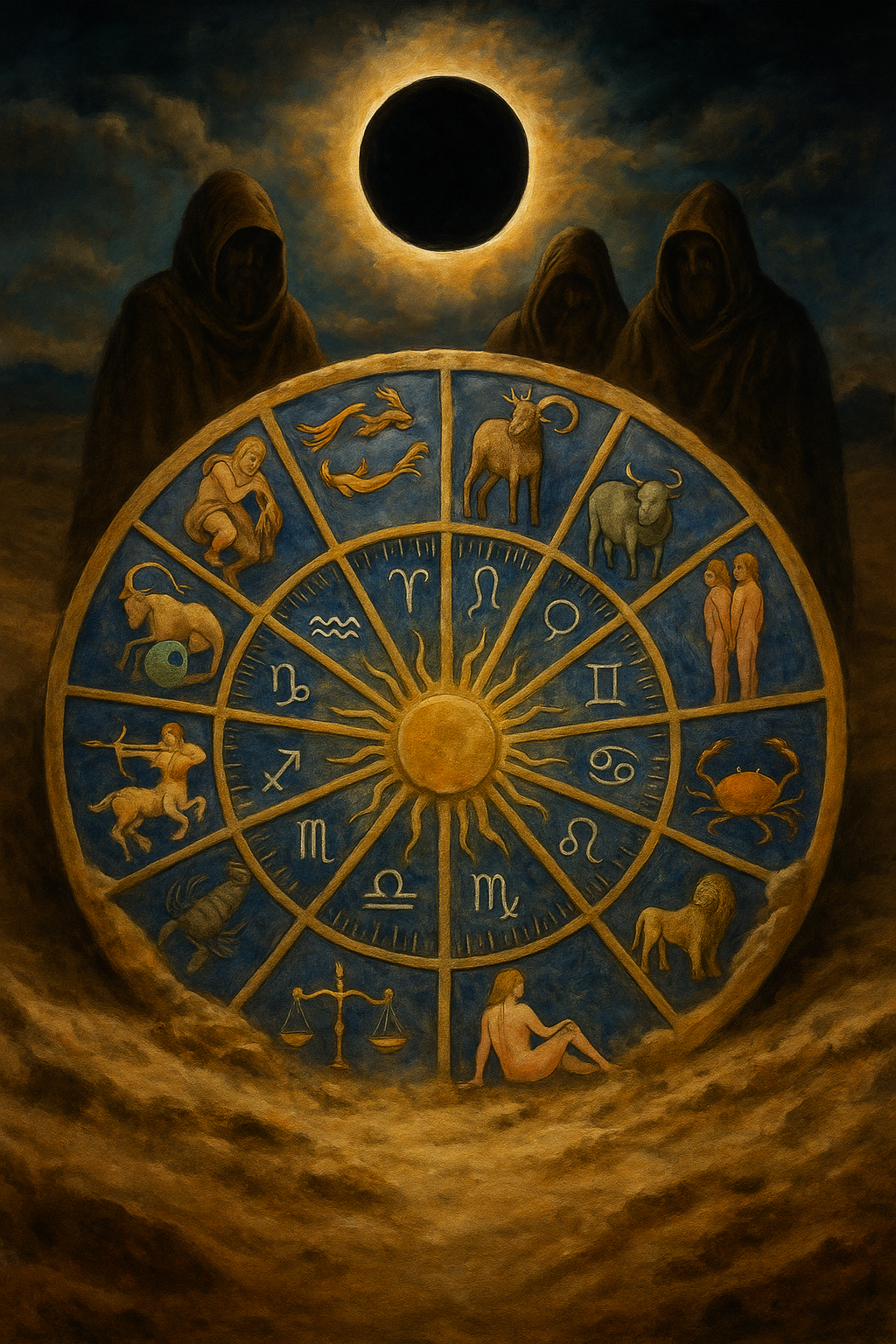
Our ancestors were very aware of the stars -luminaries-; this allowed them to orient themselves and truly understand the reality they were experiencing. In this way, they labelled the celestial points that today we know as constellations. The zodiac cross was designed, used by all advanced civilisations. This zodiacal cross represents the path of the Sun through the twelve major constellations over the course of a year. It also shows the twelve months of the year, the four seasons, as well as the solstices and equinoxes. The word “zodiac” derives from the Greek “zōidiakós” and means “the path of the animals”. This is because the constellations were personified as figures of animals.
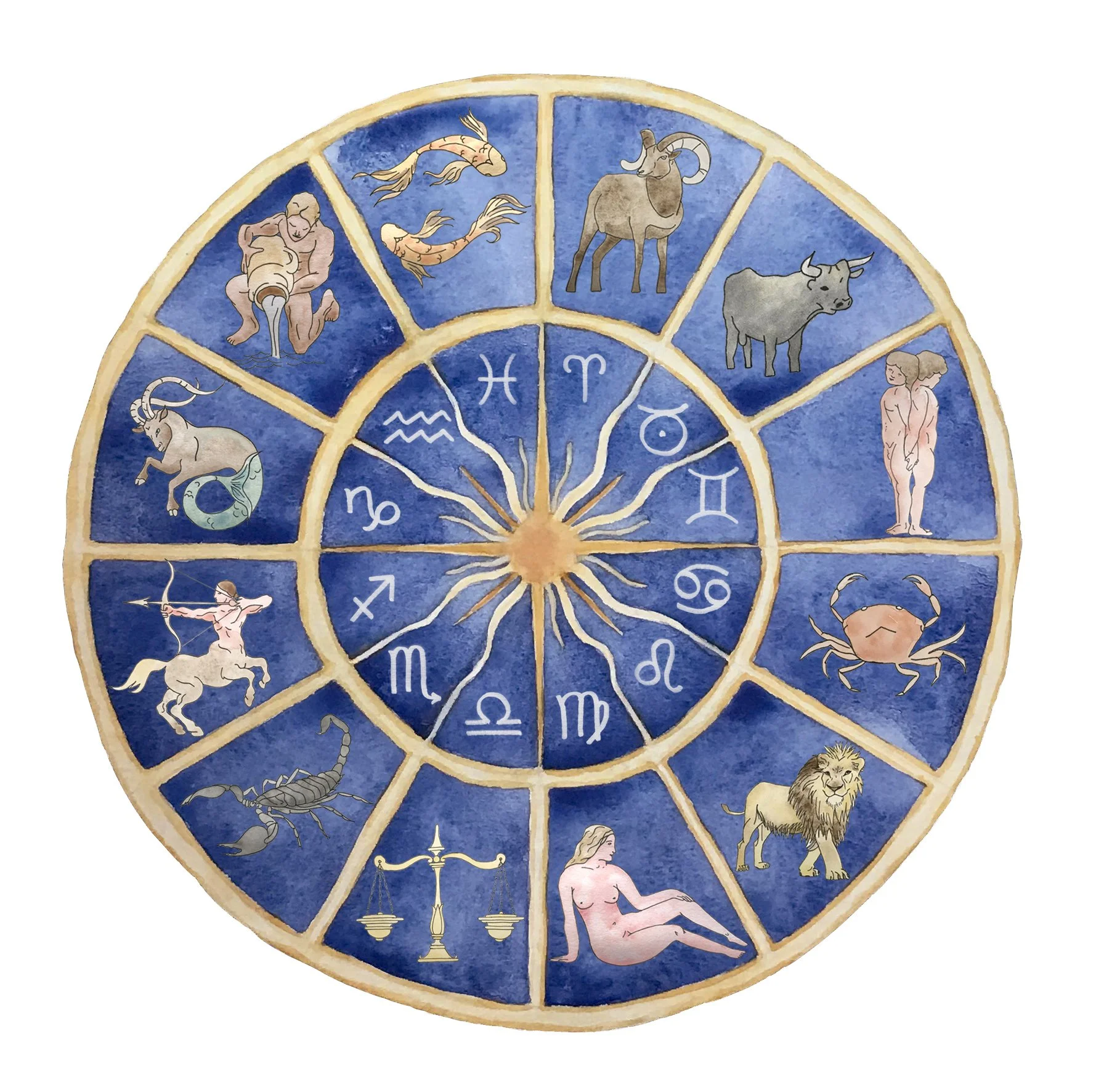
It is known that the vernal point -that is, the point in the sky where the Sun is found when it crosses the celestial equator: at the spring and autumn equinox- varies each year by about fifty arcseconds. Thus, its displacement in the sky is approximately one degree of arc every seventy-two years. This phenomenon is known as the “precession of the equinoxes”. Therefore, as this vernal point shifts in relation to the Earth, within the constellations of the zodiac, time can be measured through that displacement. The position of this point cannot be known with the naked eye, and for a long time it was believed that the ancients had not been aware of such a phenomenon, supposedly discovered in the nineteenth century of our era. But later it was realised that they knew it perfectly well; both Greeks and Egyptians had calculated it with great precision. This vernal point completes a full circuit of the zodiac -according to the heliocentric model, when the Earth returns to its point of reference with respect to the Sun- in an approximate figure of 26,000 years of the Earth. We know that our ancestors divided the sky by means of the twelve constellations recognised as equal, with thirty degrees each. The vernal point passes through each of the constellations in an approximate figure of 2,166.6 years of the Earth. In this way our ancestors created elaborate myths that reflected their movements and the relationships between these movements. The Sun, with its life-giving attributes, was considered the Sun God: the light of the world, the representative of the original creator.
In all this process there is a second element, which in reality is the primordial one: the process of the Earth itself and its capacities as a generator of life, marking the very pulse of the battle between light and darkness. Our ancestors knew that there was a stage in which the Earth slept: when the leaves change from one radiant colour to another more faded, until they finally fall. When the light diminishes and weakens, with darkness appearing to overcome the light -between autumn and winter-. In the period that goes from winter to spring, the light, without fully losing against the darkness, begins to recover its energy, it awakens: when new leaves begin to emerge on the trees, and the light rises, equalling the night -spring-. Even so, the Earth will not recover all its vitality and energy until the light of day begins to impose itself over the night, beginning its path of fullness -spring and summer-. Finally, and in the summer period -summer or autumn-, the Earth gives its fruits, this being a period destined exclusively for enjoyment, until the Earth falls asleep again. The Earth was then known as the Divine Matrix, the Mother of all living beings. Personified in goddesses -luminaries- of nature: the waters, the stones, the forests, the lands, the seas, the rivers, the Moon, etc.