How language creates your reality (and why you do not see what you cannot name)
We live in a society of labels. We have given a name to everything through the words of language, in order to differentiate one thing from another. And by naming them, we have assigned them a place in space. We are born and a programme called language is installed within us, composed of words that carry names. That is to say, if gratitude did not form part of our linguistic vocabulary, we would not express gratitude, because we would not have learnt to do so. Can we say something that we do not know exists? Or do we not know that something exists because we cannot express it? Both questions lead to the same result. And that result is based on an algorithm called conditioning.
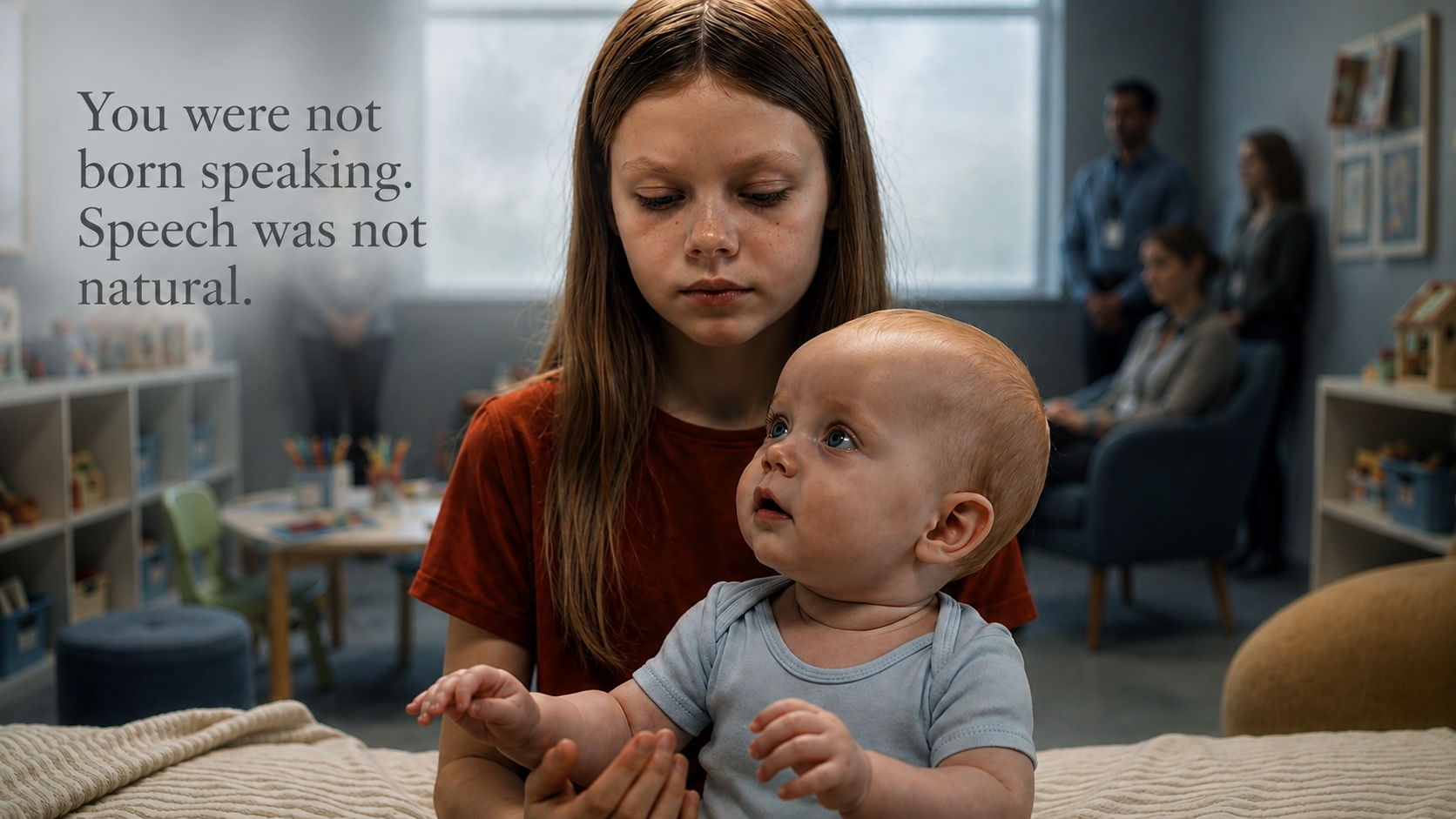
You have been taught to speak through programming, and you have been told to name things according to that programme. You could feel grateful without the need for a word to express it; it would be a natural, unnamed fact, that is, it would not have been given a place within any linguistic context or ritual. Children do not learn to speak by magic, nor do they develop speech naturally; it is imposed upon them. When we are small, sensory communication is enough: we communicate through sounds, gestures and thoughts. As we grow and develop speech from the sounds we have received, we acquire language. Our mother and father repeat “mum” and “dad” to us every day, they speak to us and constantly correct us, even forcing us to repeat words again and again until we are able to express them. Because there will be no other form of communication. There will be no time: the noise of the word will rise above the sound of silence. Because when we assign names to things, we disconnect from the senses. We stop imagining and move towards an intellectual perspective of reality through the word, by means of a language. That the sky is called “sky” does not mean that the reality of what it is corresponds to what the word expresses. It is what the prevailing language has defined that it represents. And since the creator of the word is the creator of realities, those who create the word will create the reality of what it represents.
Definition in the dictionary of the word sky:
1. Part of the atmosphere and outer space as seen from Earth, in which clouds are found and where the Sun, the Moon and the stars can be seen.
2. In certain religions, the place where the souls of the just live after death and where they enjoy complete happiness and, according to some beliefs, the presence of God or of the gods.
3. Sky is also, according to the Bible and other traditions, the firmament, the celestial vault or the arch that encloses the solid earth.
That is to say, I am living the reality of what the sky is, that which I have been told is called sky, through an educational definition that has been established politically and scientifically, and also through a religious definition. Am I really living the reality of what it is? Or what I have been told it is? Or, what is even more concerning… what I have been programmed to believe it is? Then, through which linguistic reality are we living our reality? We live in an intellectual linguistic reality, based on what we can see, touch and measure. We can name it and give it a place and a time because we can see it, touch it and measure it. Everything that cannot be seen, cannot be touched and cannot be measured cannot be named: it is hidden. Because the word does not exist. Because you have been told that what you do not see is what does not exist; therefore, you cannot truly see what is unseen, because for your language and your vision of reality it has no existence. You are showing the reality of your language: what is not seen cannot be seen. Therefore, you do not see it. But not knowing how to express it does not mean it does not exist. The problem is that, since you cannot see it, you cannot locate it in space and, in turn, you cannot touch it either. It does not exist for you. You have been told that what you do not see is supernatural. And the supernatural is that which you cannot touch or measure. And with it comes a range of imposed and predetermined words that validate the word “supernatural” and the reality of its existence. Reality is as we believe it to be, as we have learnt it or as we have been programmed to name it. Whoever names things controls the reality of what is named.