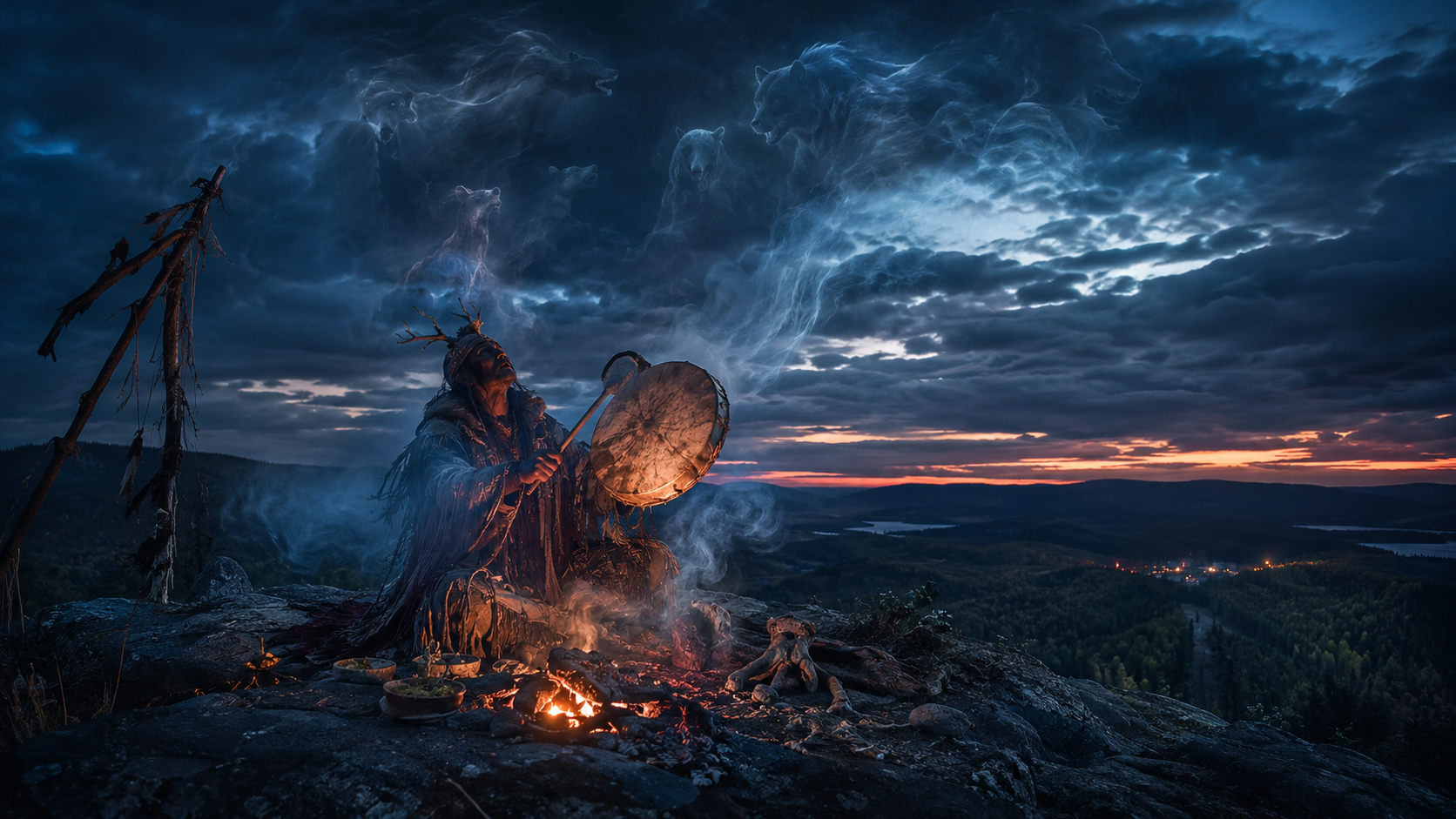
Shamanism (The Wound of the Initiate)
The spread of ancient paganism activated corporations such as Druidism. This neopaganism said that the gods and goddesses of ancient stories were actually a component of archetypal or symbolic psychology. –Rovert Graves, Joseph Campbell, Mircea Eliade exponents of this movement-. Likewise, astrology would be reinterpreted towards a Jungian astro-psychology –by Carl Gustav Jung-. Another feature of New Age neo paganism is to strongly emphasise the feminine. Understand the feminine not as simply the woman and what is related to her fertility, but as an archetypal root foundation that transcends the human and connects the original myths. This feminist movement or feminism suggests that a golden age of the feminine is approaching, the resurgence of a prehistoric matriarchy that worshipped the Great Mother Goddess –Geography -, and its different faces -the young, the adult and the old -. The Lithuanian researcher Marija Gimbutas in her book The Language of the Goddess in 1989, profoundly exposes how this allegedly matriarchal legacy led political and religious life in prehistoric humanity. It was based on the multitude of findings regarding statuettes representing goddesses or female bodies found in the different monuments of prehistory. In addition, Earth and Nature were feminine aspects like the Moon, which was an archetype of fertility –28-day cycles like female menstruation-, of emotions –because supposedly it conditioned the tides- and the unconscious –due to the double face of the Moon-: the visible and the hidden. All of them motivated by the historical patriarchal suppression.
Another aspect that motivated the New Age movement was the ideological recovery of communion with nature due to the discovery -postcolonial- of the last indigenous tribes -especially in America, Africa or Australia-, those that had not yet passed through the civilising process. Those tribes were full of values, worldviews, and ritualistic practices reminiscent of the old pagan world. The concept of shaman appeared in the world of information and with-it therapeutic shamanism. The word shaman is etymologically recognised in stories of Russian pilgrims of the sixteenth century, who in their travels through Siberia and Mongolia -North Asia- had contact with the Tungus tribes and acquired the word. In the language of the Turkic-Tuguses the term shaman -šamán- literally means who knows -he/ she- and was intended for those who practiced medicine -medical-. The actions carried out by these shamans, consisted of entering unusual mental states for pilgrims Russians. The linguistic root sha- means one who knows. In turn, the word šamán is taken from the Palí sha men, samana and also from the Sanskrit sramana – fatigue, effort-. Through Russian it came to German and from it to English -shaman-. At the end of the 19th century the American politician Elihu Washburn Hopkins said this about the term shaman: The word shaman is in fact used loosely for almost any savage witch doctor who becomes frantic and has communication with the spirits. In its original form it appears to be a corruption of the Sanskrit shramana, which indicates a disciple of Buddha and among the Mongols became synonymous with magician. With the New Age movement, the term covered the spiritualist covers, announcing a religious evolutionism: Shamanism. Before the doctrine was established, shamanism was practiced throughout the ancient world. The older data that precede points to Siberia as the spearhead of shamanism, where it would arrive thanks to the immigrants to the new world. This theory is supported by the Siberian cave paintings -1000 BC-, although the rise of primitive shamanism would be in Central Asia –among the Turkic-Mongolian, Himalayan, Finno-Ugric and Arctic peoples-, such as Korea, Japan, India, China, Tibet, Indochina, America-
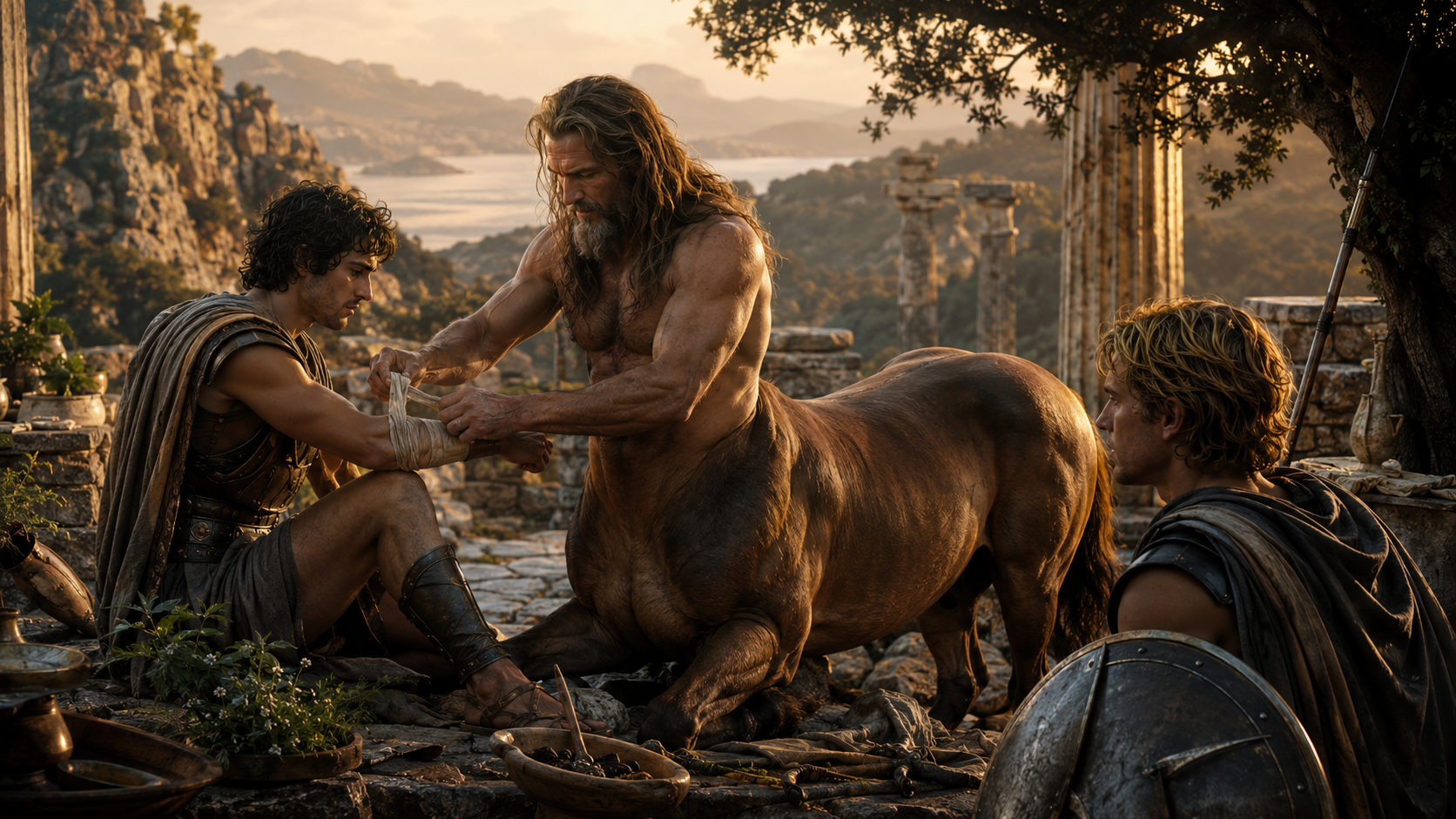
There are Greek quotes dating from the 5th century BC narrating the existence of a native Greek shaman, who insisted that the cults dedicated to Dionysus would be related to shamanism, such as the myth of the centaur Chiron, who in fact would be a shaman, who would have his alter ego in the Aztec Quetzalcoatl. The shaman was someone who had had an ailment, suffered from some type of disability -the loss of sight in Asian and Nordic countries was a symbol of having been selected by the gods with vision- or simply by destiny -In most pagan civilisations there have been two types of leadership: the Druids who dealt with esoteric social aspects belonging to the collective, and the tribal chiefs who guaranteed the safety and protection of the community -. The fact is that these chosen ones had gone through a stormy situation or initiation that had led them to wake up. Waking up meant seeing reality as it really was. A multi-dimensional spiritual reality. According to legend, the centaur Chiron - son of Cronos - was seriously wounded in the knee by the arrow of his friend Hercules while they faced a clan of evil centaurs. Such a defect meant an inability to maintain the bond with the rest of his clan, the centaurs. It was an accident, Hercules did not want to harm him, he was his friend! But fate required from him an experience that would change his life and make him different from the rest of his peers. Not being able to continue living the life that he continued, he had no choice but to live a different life conditioned by his pain. This fact caused Apollo -solar god- to sponsor him and invest him with wisdom -awakening-. The gift that was given to him was the discovery that the only means by which he could heal his wound would be to reverse it in other people. By helping others, he could help himself. This is how it was that Chiron was in charge of mythical heroes such as King Ulysses or the Great King Achilles. Two completely different personalities. One representing the struggle and adventures, and the other symbolising observation and prudence. The education of Chiron, valid for both aspects as extreme as that of Odysseus and Achilles, shows what the wisdom that this centaur shaman awakened was all about: taking an ability from the inside so that it can be expressed on the outside.
The shaman would be a lonely individual or leader in the occult. Well, in order to travel from one world to another through a change of state of consciousness, it was necessary to detach from a bond of social community -the Chiron case- because its partners were animal spirits and beings from other dimensions. These trance states occurred in many different ways -depending on the shamanic group- many ingested psychedelic products that triggered the trances of consciousness and from there they channelled the information that was given to them from other planes. Channelling meant transcribe into words the different visions or messages that occurred in those trance states. But let’s not make the mistake of imagining these shamans as plant junkies. This fruit was sacred, ancestral, and used exclusively in cases of ritualistic need. In other words, this relationship that the shaman had with these worlds was not exclusive in moments of trance, it was also found through meditation and/or philosophical reflection. They claimed that the shaman was capable of diagnosing and seeking solutions to human suffering, whether through a physical or spiritual illness. They could also control the weather, prophesy, interpret dreams, project astral, and as travel between higher and lower worlds. Shamanism is seen as a universal religion, although specialists do not consider it a religion in itself -since the prevailing religious institutions, in general, are against pagan spiritualism- because they do not have a representative figure such as a Church or Synagogue, or a symbolic leader. For shamans, the visible world is permeated by invisible forces and spirits of parallel dimensions that coexist simultaneously with our own. Thus, the shaman is dedicated to voluntarily contacting this dimension -hidden from our vision- of reality, adapting it to human benefit. They were solitary beings, said to have inhabited caves.