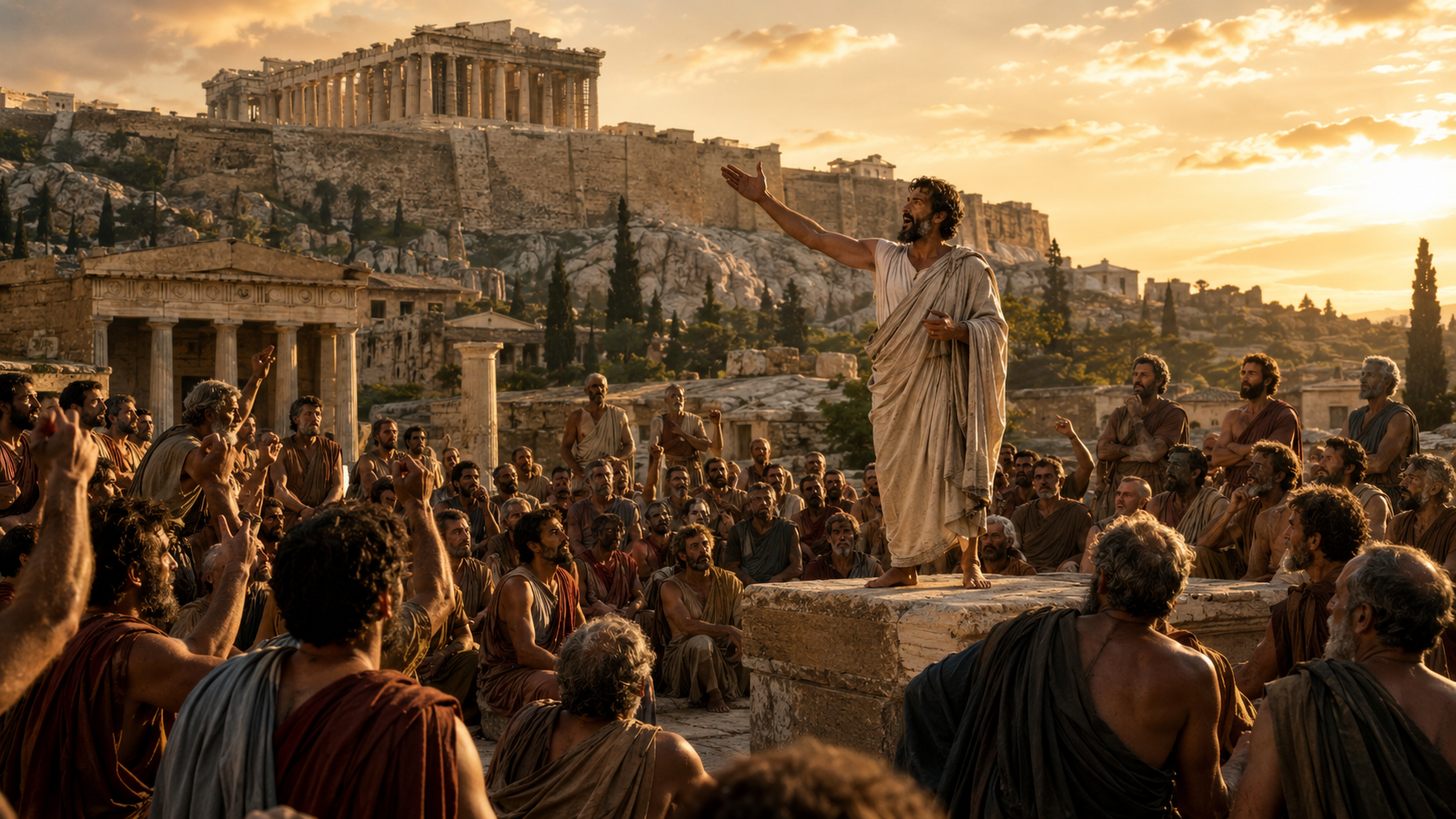
The Art of Governing Peoples (The Architects of Social Order)
In modern times, the Roman Church, and Christianity in particular, is the perfect target of many political and corporate groups, designers of current beliefs. Based on human rights. But standing upright is not an allegory of standing firm, like a soldier? Human rights are the romantic definition used to validate laws or rules, sometimes also called politics. Therefore, in corporate environments you have their company policies -they are like small states-. While religious figures and scientists have argued over the reality of the world, politicians -philosophers- have been defining it. But what is politics? We understand politics as an ideological governmental belief oriented towards human decision-making over social organisational objectives. It could also be defined as: a way of exercising power over the various conflicts between the interests of a society, or as the art of governing peoples. The discipline that studies these political activities is called political science, and those who study it are called political scientists, whereas those who practise it or aspire to a state position are called politicians. The etymological origin seems to come from the Greek polis, meaning city, and from there arise multiple derivatives such as politikos, which represents the social aspect of the polis.
Aristotle wrote that man is a zōon politikon, meaning that the human being is a social animal, living in a state or city subject to laws created by reason and by the linguistic and moral capacity of men. We find another term related to politikos, which is the word polites, meaning citizen of the polis, and from there we find another related term, politeia. This word was widely used by two of the most famous philosophers of modern times, to title their works of social reasoning regarding the Polis. These philosophers are, and were: Plato, in his dialogue known as Republic, and Aristotle in his work translated as Politics. In common language, politeia had the primary meaning of citizenship, that is, of a group of citizens. But Aristotle used it to define his political proposal, which would be what we understand as democracy, that is, a government consisting of a mixture of rich and poor, and it seems curious, but what we call demagogy, Aristotle called demokratia. Plato’s student defines politeia as:
the organisation of the polis and of the different magistracies in the cities, especially the supreme one. How they are distributed, what the sovereign element is and what the purpose of the community is in each case.
Politeia applied to any political organisation could be translated as constitution. The term politeia was taken by the Roman Cicero, and in this way it reached our days as the word politics

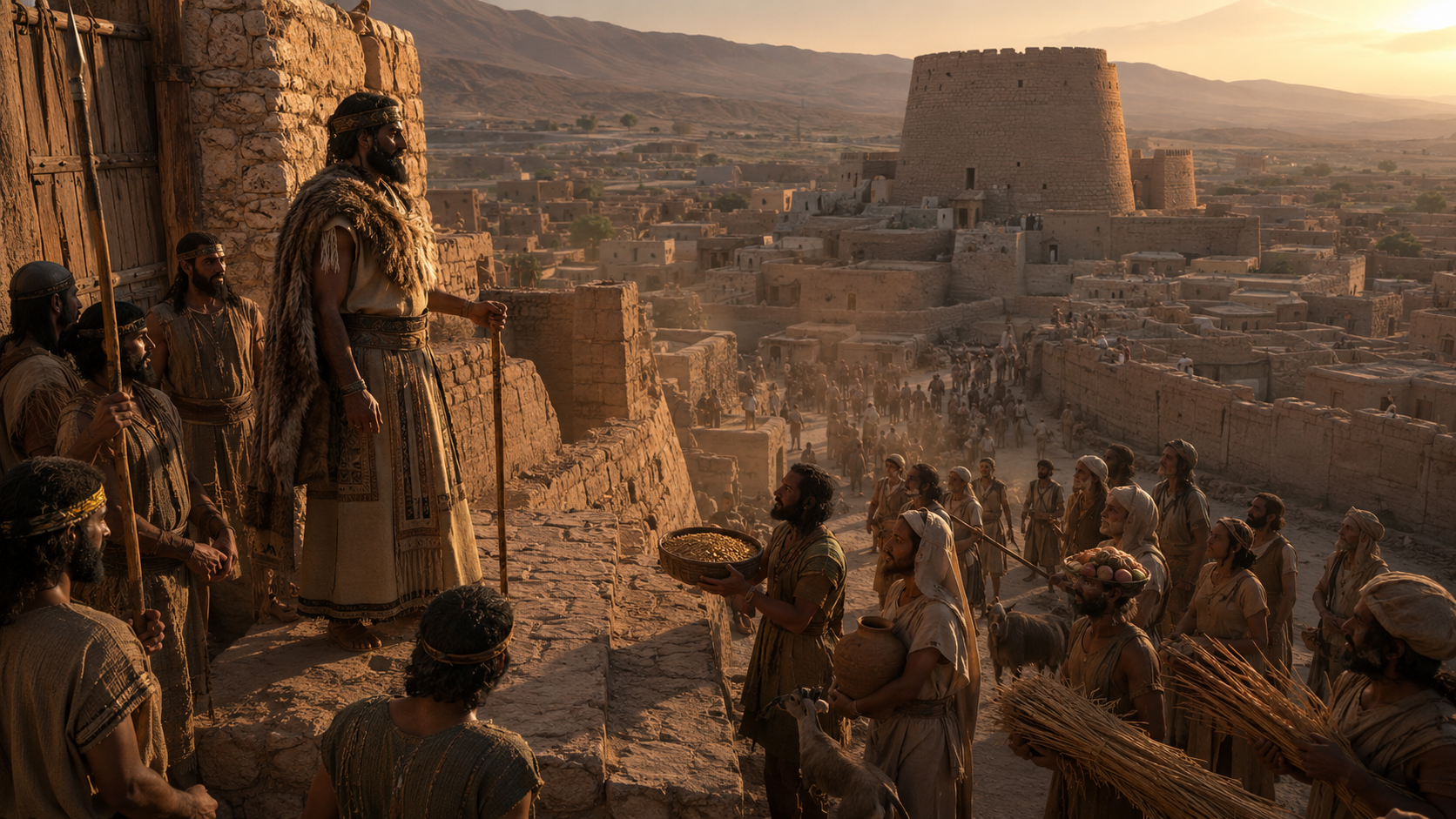
It is important to point out that, as far as we know, it was in ancient Greece that the social need to organise under governmental parameters that were not absolutist began to be formalised, that is, not governed by a single visible head who determines and orders all social, educational and structural rights through tyranny. Instead, through intellectuality as the banner of reason. But the fact that the definition of the word politics was founded in the Hellenic era does not mean that previously there were no systems of organisation that today we identify as political. Apparently, human beings are social by birth, because until a very advanced age we need to communicate with others to stay alive. So there has always had to be a social system, whether intellectual, absolutist or instinctive. Whether through families, communities, clans or tribes -where the wisest, oldest and strongest was chosen to lead-. As the population grew, the tribes themselves grew, and with that came wars to lead them. Leaders preserved their lineages and/or dynasties through inheritance, so before dying they could freely designate who should replace them in command, the chosen one being in most cases the firstborn. From there we know nothing more. Only that one day, around the year 7000 B.C., large cities such as Jericho appeared, under social or political systems governed by kings or absolutist monarchs, and the people were considered subjects with the obligation to pay tribute to the monarch. Tribes, theoretically, left caves and forests, and built the first sedentary communities, until the first polis appeared under the first monarchical governments. These city-states, by expanding their power over other cities, tribes or states, eventually became empires. The Sumerian empire appeared, followed by Chinese, Egyptian and Indus Valley dynasties. Later came the Greek empire, which, as we have seen, transformed absolutist politics into a democratic government, where a council elected by the citizens represented each of the city-states. Very similar to the democratic European Union, which is the union of different city-states under the same government or constitution, supposedly democratic.
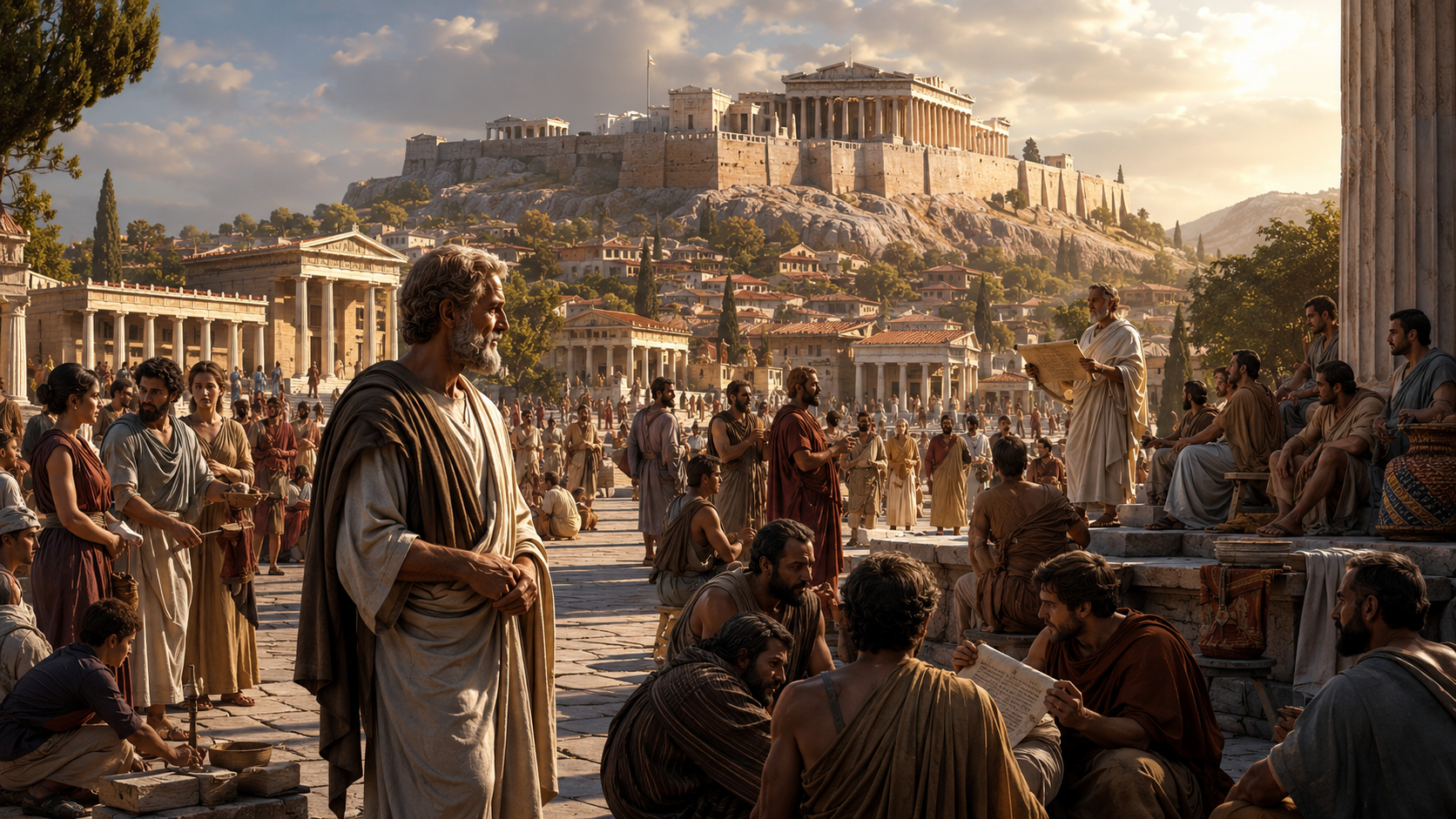
In Greece the political concept of democracy was born, in the era of nations the demokratia -demagogy- is used politically. Centuries later, the Romans invaded Greece, and despite their eternal admiration for it and trying to maintain the democratic social system in the country, they eventually had no choice but to replace it with dictatorships. After the fall of the Roman Empire, a new political class emerged, formed by military men and landowners called nobility. The poor were mostly servants of the nobles, who forced them to work the land or build infrastructures in exchange for being able to feed their families. This period of dictatorship of the nobles came to an end between the 15th and 17th centuries, when the bourgeoisie emerged, that is, servants or labourers who, through effort and cunning, demanded equal opportunities for all citizens. This movement gave rise to the French Revolution. Nobles and bourgeois are those who in modern times continue to determine the social or political aspects of the societies they lead through corporate structures. That is, politics is no longer practised, it is sold. After the constitution of the United States, a wave of democratic regimes emerged, where state decision-making responded to the general will of the citizenry. For a time it seemed that the old objective of representing the ideas of the people inside and outside the state could be possible. But the theory soon fell into the trap of practice. Because it is truly complicated -tempting- that personal interests do not interfere with the common good, at least that has been the result throughout known history. Both bourgeois and nobles have ended up sweeping home whenever possible. In modern times they are called socialists or communists, and they represent democratic left-wing policies, these bourgeois focus on social equality and control of the market -everyone poor, except the government-, and on the other side we have the nobles, called republicans or conservatives, these right-wing political movements defend the right to private property and also the free market -creating wealth and poverty-.
In summary, the democratic idea over the organisation of states has proven to be a clear utopia. Since in a democratic society there are no interests. For that reason movements such as communism were born, since what was called democratic had become disguised absolutism, the excuse used by bourgeois and nobles to share power instead of killing each other for it. Democracy benefited few beyond those who already owned the planet by inheritance, the communist movement was the political action of giving power to the state -above the people, bourgeois and nobles-. But who is the state? The people, the bourgeois and the nobles. Thus, the communist far left touched the fascist far right and the political wheel revealed itself for what it really was. The same line of polarity. But by the time that happened, the bourgeois and nobles had already become corporations, they no longer needed to be voted for to maintain their power. Because their corporations had bought the religious, the scientists, the politicians, the people. In the modern era, the political system is based on corporate interests. But were those the desires of those Greek philosophers? Did Plato truly believe in the possibility of an egalitarian state in all its facets? In the hands of the wisest beings of that society? Plato said that the way to govern the polis was through observation of reality and the testing of idealistic changes and improvements, directed by a consensus of the wisest among the wise. He then mentioned an ancestral human society which he called Atlantis, which lived in a golden age 9,000 years before the Greeks, under a political system like the one he proposed. But 9,000 years before the Greeks… the first city had not even been created yet! Or had it?