The Spring Equinox (The Return of the Sun to Geography)
Holy Week –in latin-, Passover or Easter, is a Christian holiday, and represents one of the most important dates in the Christian liturgical calendar, since these festivities commemorate the supposed chapter in the life of Jesus known as the passion, which is nothing other than the process that led man to be put on the cross, and later reborn. Thus, Holy Week would be a period of eight days, beginning on Palm Sunday, culminating with Resurrection Sunday. According to Catholic Christians this week is a time to dedicate themselves to prayer and reflect on Jesus Christ, because according to them, Jesus decides to take the place of men and receive punishment to free humanity from sin. In this period, the Catholic performs various acts; as processions, the staging of the drama of the death and passion of the Christ, among others. This paschal triduum has been called:
Holy Thursday: this would be the day that the last supper of Jesus of Nazareth is celebrated with his disciples, also the establishment of the Eucharist (bread and wine), the priestly order and the washing of feet. During Good Friday the passion of Christ and the moment of his crucifixion are remembered, on this day the Catholic faithful keep fasting and abstain from meat as penance. In Holy Saturday, which is the day that measured between death and resurrection. On this day the devotees’ light candles and bless the water in anticipation of the resurrection of Christ, which takes place at dawn on Resurrection Sunday. The festivities end on Resurrection Sunday, three days after his death, this being the day of great joy for the faithful, since Jesus appeared before his disciples to bring them the hope of a new life, in the kingdom of heaven.
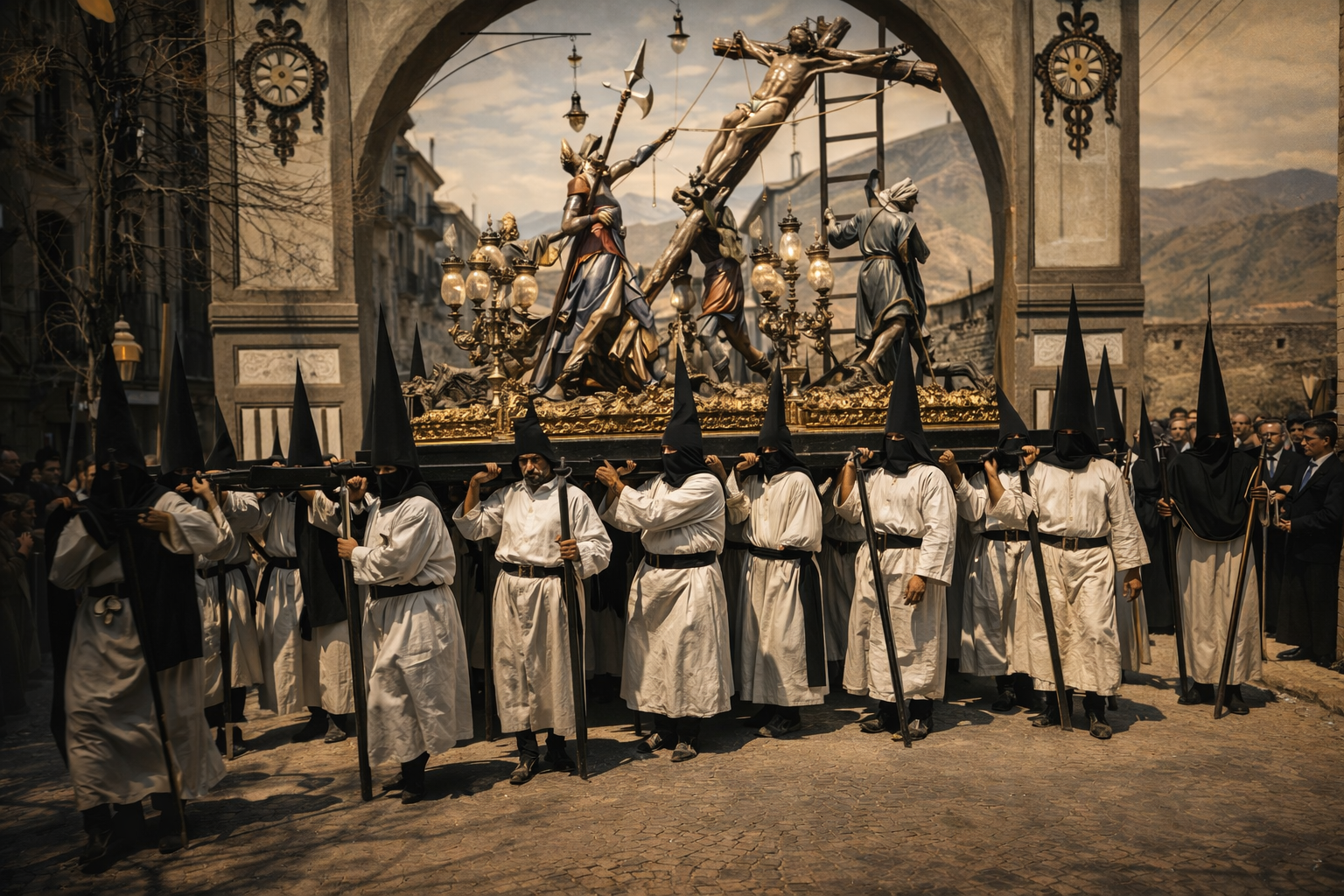
With Easter Day or Resurrection Sunday, a period known as paschal time also begins, which lasts fifty days, ending on Pentecost Sunday. According to the New Testament, with Easter, God gives Christians hope by resurrection in a new way of life. But why on these dates? Did the Passion of Christ really take place on the days known as Holy Week? Religions have been copying each other since the lost times as has already been seen. And the Catholic is an expert in it. Holy Week or Easter Day is a mobile celebration, the day of which varies each year. This is because these dates are not set following the Gregorian civil calendar, but by the liturgical year, governed by lunar cycles. The difference between the civil and the liturgical calendar, is that the civil calendar begins on January 1 and ends on December 31, narrating in some way the life of the Sun at the vernal point of the solstices. While the liturgical calendar does not narrate the life of the man Jesus, but rather the path that the son of God followed to carry out his mission, reaching the peak of passion, death, resurrection and glorification. This being the great triumph of the lamb. Thus, the liturgical calendar would begin between November/December, preparing for the arrival of the son. Easter or the day of the resurrection is always located after the first full moon after the beginning of spring or spring equinox in the northern hemisphere, and autumn equinox, in the southern hemisphere. In this way, Holy Week could be celebrated between March 22 and April 25 according to the civil or Gregorian calendar. Therefore, calculating this day is of utmost importance to also predict the other Catholic celebrations such as Pentecost -summer solstice or the coming of the holy spirit- and the Ascension, which would be 10 days before Pentecost and 40 days after the resurrection.
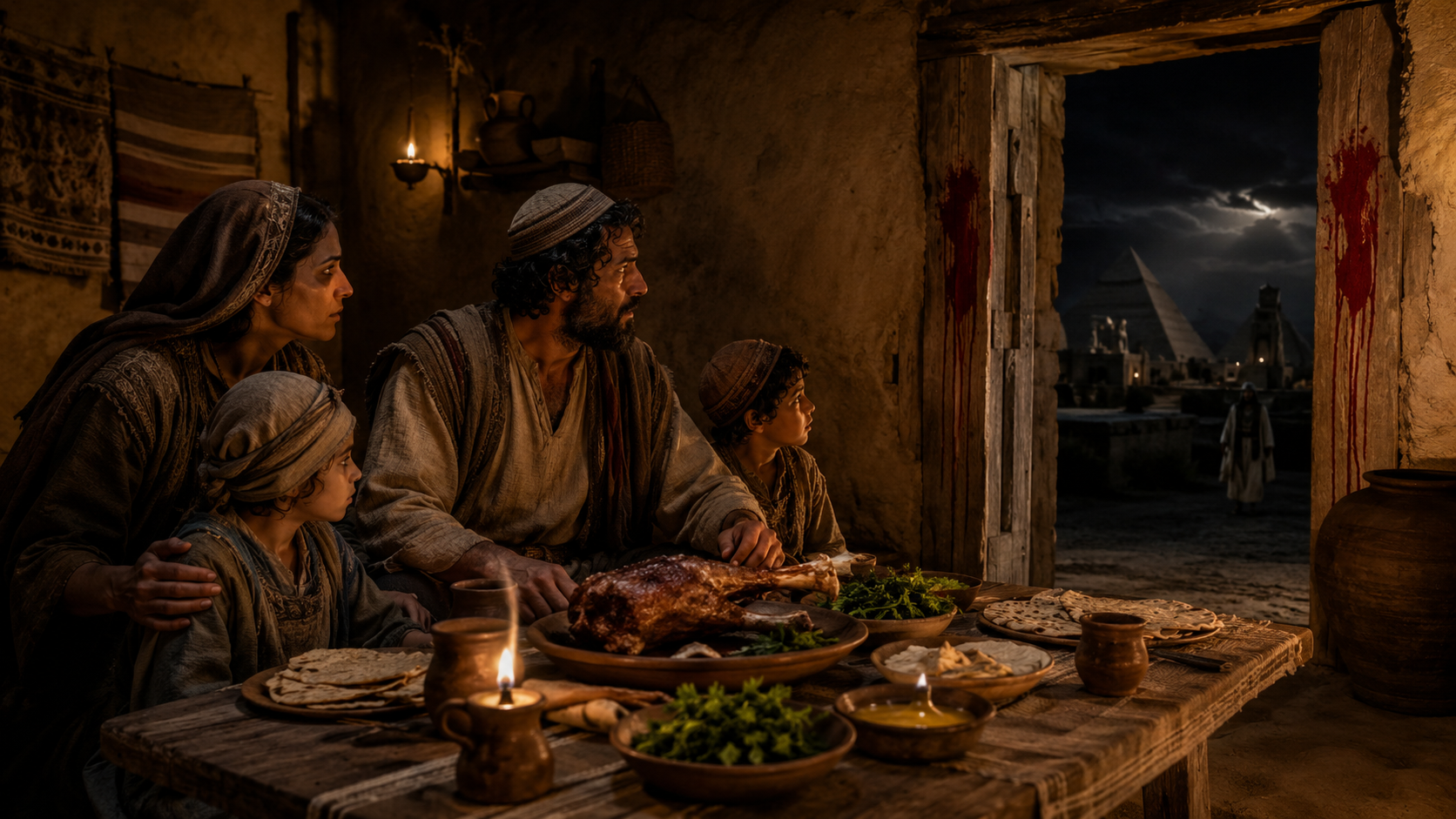
The origin of the religious celebration of Passover is related in the old Hebrew testament -Exodus-, there the march of the people of Israel is narrated, who after hundreds of years of slavery in Egyptian land were marching towards the promised land. The Christians separated the celebration of the Jewish Passover and the Christian one in the first Council of Nicaea in 235 A.D, where they also defined the elements of the Christian celebration. The term Passover comes from the Latin páscae, which in turn comes from the Greek pasjua, an adaptation of the Hebrew pésaj, which means step or jump. In all this religious mess, there is again a pagan origin that we can easily detect in the very symbolisms of the Easter festival: the rabbit and the egg. Before Christianity, the Germanic Celtic peoples considered the rabbit the symbol of fertility and associated it with the appearance of spring, with the rebirth and/or renewal of nature after the winter season. The rabbit was therefore, among all species, the first animal to emerge from burrows and procreate, due to its high reproductive capacity. One of the greatest symbols of the fertility, since they take a period of 28 days to gestate and give birth to their cubs, and 28 days is the cycle of a lunation. According to ancient legends, the rabbit appeared on Easter day with a basket full of sweets and colourful eggs that he hid so they could be found. It is probably here where the tradition of hiding Easter eggs appears for children to find. The most Christian took this feast from pagan traditions, and that is why today in many parts of the world the Mona Passover day or Easter Monday is celebrated, symbolising the end of Christian Lent, that is, the forty days of fasting.
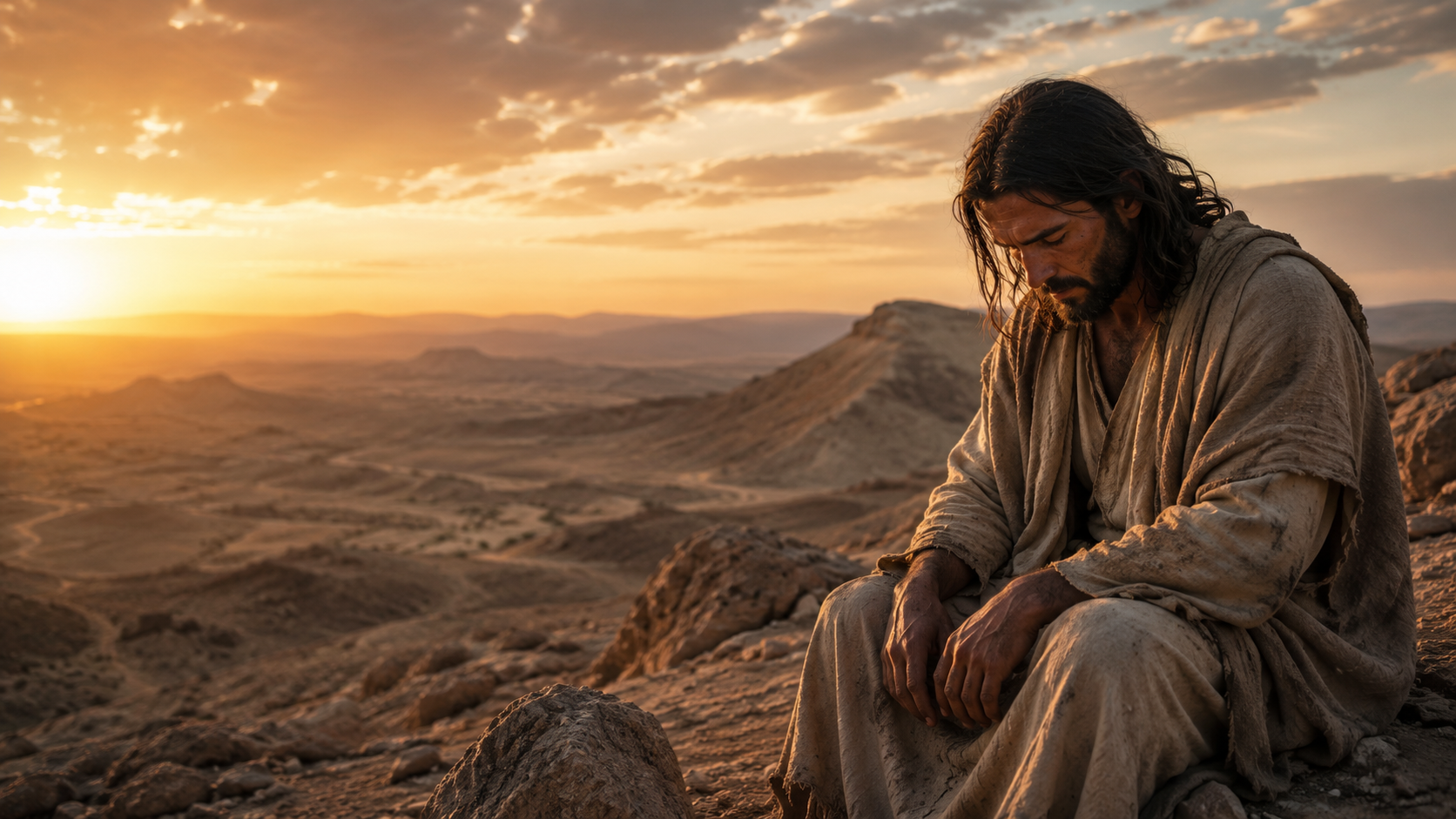
Lent commemorates the 40 days that Jesus spent in the desert and begins 40 days before Easter. The day of La Mona, is a Catholic-pagan celebration that is currently preserved in the Mediterranean area. Traditionally, the godfather gives the monkey, which is the Easter egg, to her godson on Easter Sunday, after mass. This food would be consumed the next day, that is, Easter Monday. Well, the custom is to go out to the countryside to eat it as a family. A feast that also includes lamb chops, grilled rabbit, paella, and wine, cava or champagne. In this way, nowadays pastry shops compete to offer the market the best cake, cakes, and chocolate eggs. The forms of these sweets exceed the borders of credibility, and as with Christmas, it is a day in which companies exploit the marketing trade, it no longer matters the Easter egg, but that the godson has his cake and the family meal takes place. That the product is sold. Nowhere in the holy scriptures or bible is anything mentioned about a rabbit or an egg. Still, it is a Christian festivity to commemorate the life expectancy after the resurrection of Jesus in Holy Week. Catholics began to use this tradition in consequence of the abstinence that the Catholic Church ordered during Lent. During this period, Christians cannot eat meat, eggs, or dairy. At the end of Lent, the faithful gathered in churches and gave eggs decorated with colours and festive motifs, since Jesus had been reborn and abstinence was ending, it had to be celebrated. The reality of all these mythological stories has to do with Easter, spring returns, the fields regain their greenery, the thousand-coloured flowers abound in vegetation, the animals reproduce.
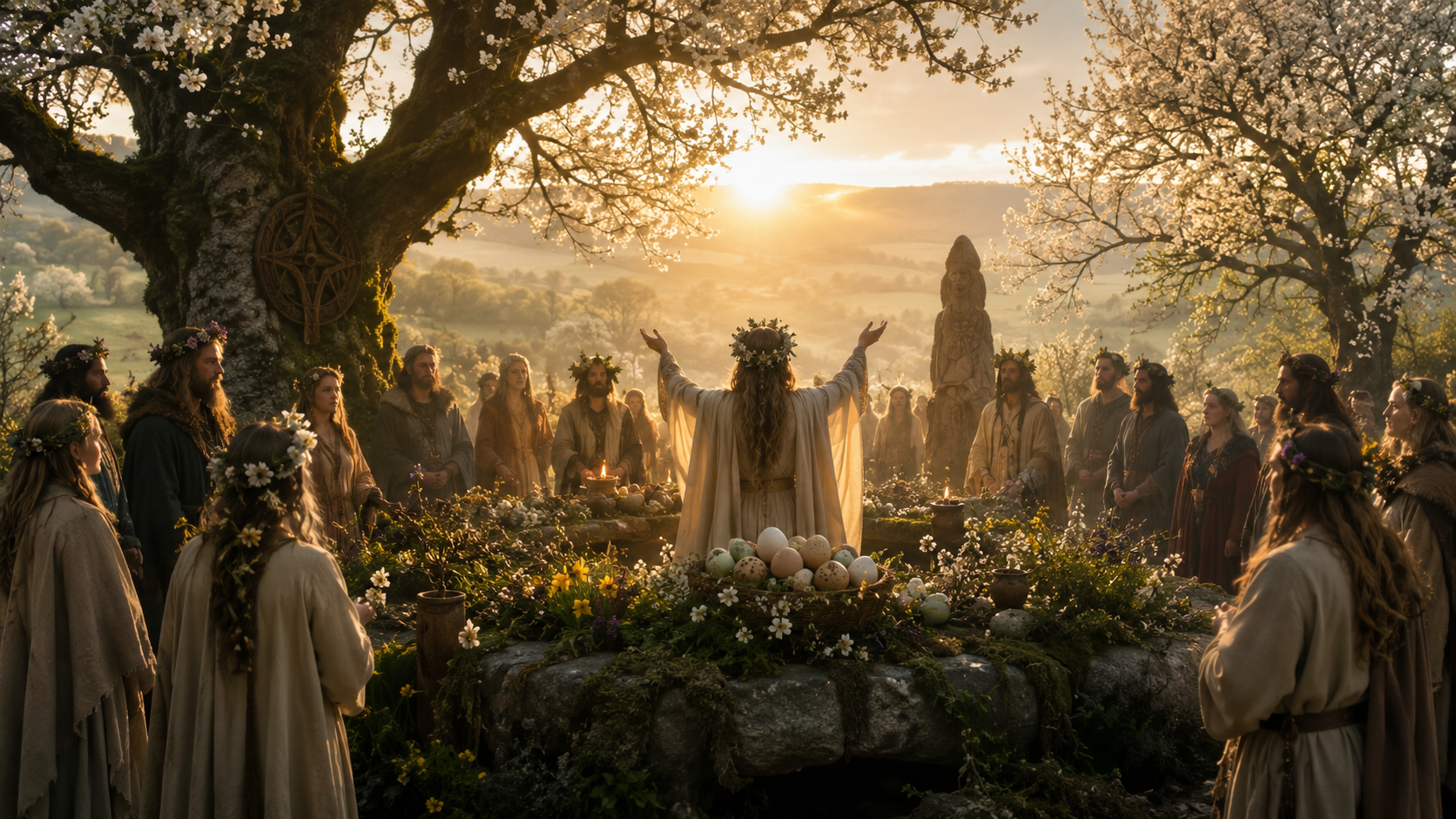
It is not by chance that an egg is associated with it, a symbol of new life: fertility and crops. For the Germanic Celts, the feast of Ostara was the celebration of the spring equinox. Also known as the festival of trees. This would be the fertility rite that would celebrate the birth of spring and life. On that day, witches lit new bonfires at sunrise, rang bells and decorated boiled eggs, all this custom was associated with Eostre -Ostara-, goddess of fertility and dawn. She was worshipped throughout the world, under names such as Aphrodite, Venus, Isis, etc. The festival of Ostara was absorbed by Christianity and on these dates now Easter is celebrated. The similarity between the name of the goddess Eostre and Easter is determinant. The rite of painting eggs, decorating them and giving them as an offering to the goddess symbolises the fertility of the Goddess -geography- and of the God -Sun-, symbol of all Celtic creation. When decorated, they were believed to represent magical objects, so by hiding them, the people who found them would achieve their goals and be successful in that year. In addition, the legend of the Easter rabbit originates with the goddess Eostre. Well, it is said that a gentle bunny asked the Goddess for favours and in return gave her decorated eggs. According to legend, Eostre marvelled at the beauty of the eggs, and felt so much joy that she shared them with humanity so that they could feel such beauty and happiness. Then she had the rabbit travel around the world so that it distributed and gave the decorated eggs. Thus, at the time of the equinox, the rabbit travelled all over the world giving away eggs. Another symbol in addition to the eggs, are the flowers that are given and with which the houses are decorated. Among the most widely used flowers and herbs in Ostara are lavender, acorns, daffodils, Easter lily, honeysuckle, rosemary, violets, jasmine, rose, strawberry, carnations, jonquil, tulip, saffron and violets.