The Christmas Market (When Christmas Became Consumption)
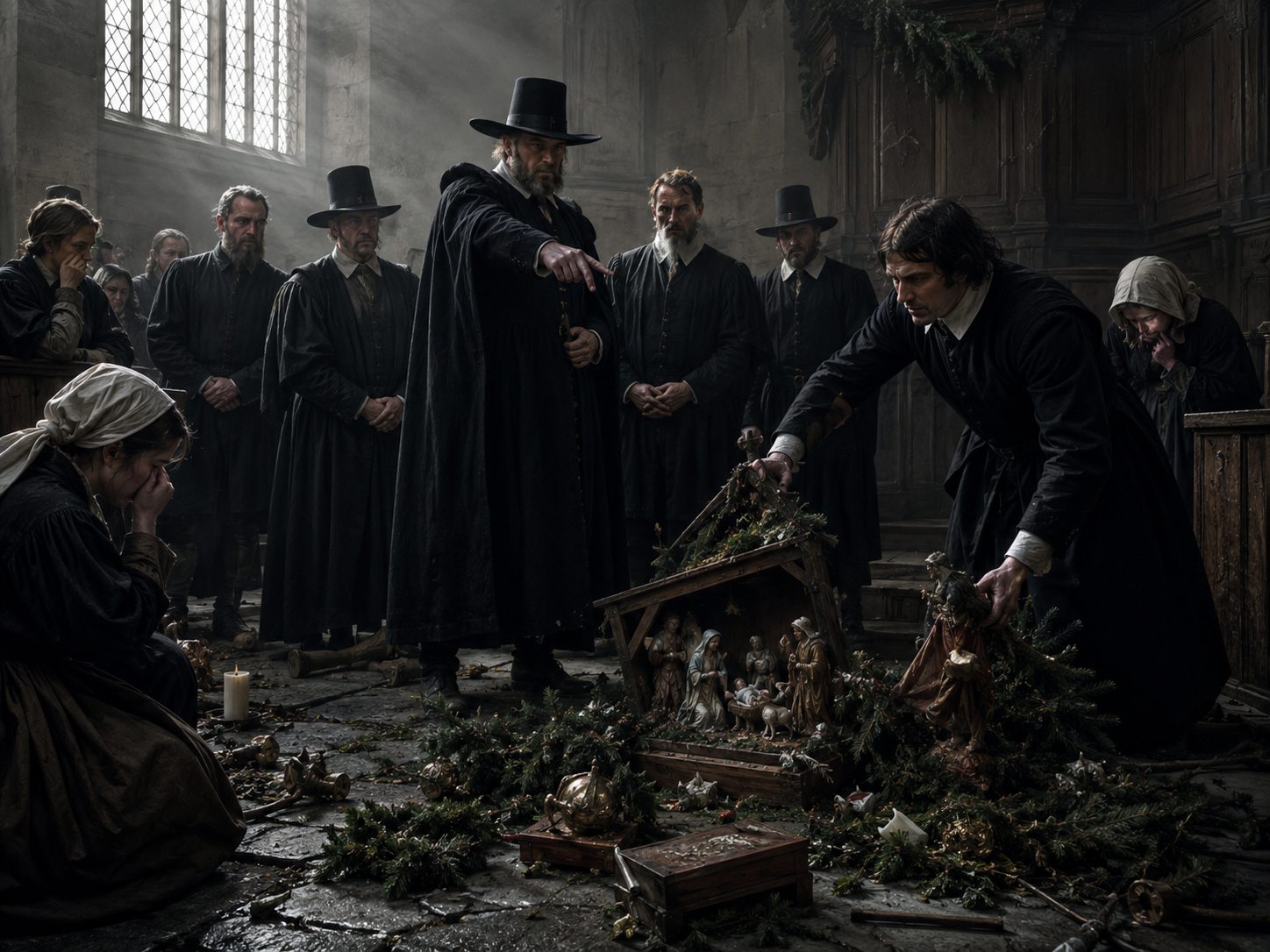
It was not until the Protestant Reformation that Christmas found its fiercest rivals. The birth of Christ was forbidden by some Protestant churches, referring to Christmas as “papist traps” and “the claws of the beast”, due to its association with ancient paganism. Thus, in 1647, the English Puritans, victors of the English Civil War, banned the celebration of Christmas. It was not until the Restoration of 1660 that the prohibition came to an end, largely due to social pressure. Even so, members of the reformist clergy continued to reject the idea of Christmas, relying on Puritan arguments. Likewise, during the time of the American Revolution, Christmas fell into disrepute, as it was considered an English custom. In modern times, independent Baptist churches and Protestant congregations such as Jehovah’s Witnesses do not celebrate Christmas, as they consider it a pagan festivity not announced in the New Testament, and they reject the 25th of December as the date of Jesus’ birth. In 1820, due to the tensions between churches and the emergence of sectarian Christian congregations, concern arose over the survival of this festivity, particularly among British artists, who made efforts to revive it. Charles Dickens, in A Christmas Carol, published in 1843, played a key role in the reinvention of Christmas. He placed particular emphasis on family celebration, goodwill, compassion, generosity, and so on. From then on, Christmas gradually merged its religious character with a tradition of social and family gathering, largely due to the popularity of these celebrations and the rise of the free market.
It was in the 19th century that Christmas became firmly established in the modern traditional vision we hold today. The custom of exchanging gifts, Secret Santa, the figure of Santa Claus, sending Christmas cards, or singing carols became the defining trend of the century. These customs were skilfully exploited by marketing to expand Christmas across the world, offering a character distinct from the religious one, and frankly bearing little or nothing to do with the traditional Christian -or pagan- festival. In the new millennium, Christmas is celebrated by people all over the world, both religious and non-believers, not for its traditional origin but for the social and family gathering it represents. As a result, new traditions emerged, such as Christmas Eve dinner, consisting of a large family banquet lasting from the evening of Christmas Eve until after midnight. A reflection of the Christmas season can be seen in the decoration of homes and balconies, streets lit with festive lights, and the Christmas tree adorned with a star. Christmas had ceased to be a religious tradition and had become a product of the free market. Chefs, entrepreneurs, musicians, filmmakers, and people from all over the world prepare to release their finest works to the market -propaganda-, while families and friends spend all their money on the most appropriate gifts, and shopping centres use the most advanced marketing techniques to encourage consumers to make such purchases, thereby satisfying global demand. Corporate agencies advertise products linked to the Christmas spirit, while offering you the best appliance or property. Santa Claus, for example, was shaped and popularised by the Coca-Cola company to satisfy the desires of our children. That was the Christmas spirit.