Real Time Is Not What the Sun Indicates (But What Human Inventions Say It Is)
At Crathes Castle in Scotland, the world›s oldest calendar was discovered, dating from 8000 BC to 6000 BC. This calendar was Lunar. The calendar consists of a series of holes dug in a row in the ground, believed to have contained wooden posts that made each time measurement clearly visible. The arrangement of the holes is also aligned with the winter solstice, with which the system has an annual astronomical correction with which the passage of time and the change of seasons could be better calculated. This piece could be the oldest historical monument of the British Isles. The next oldest calendar, also lunar, belongs to the Mesopotamian civilisation - Sumerians, Assyrians and Babylonians-. What does the lunar calendar consist of? It is the way to calculate the years according to the cycles of the Moon. In this calendar, a lunar month is a period between two moments when the moon is in exactly the same phase - be it new, waxing or waning - and each lunar month corresponds to 29.53 solar days. Going through nine phases: new moon, waxing moon, waxing quarter, waxing gibbous moon, full moon, waning gibbous moon, last quarter, waning moon, black moon -according to the modern heliocentric worldview, where the Sun is the centre of each solar system, the lunar phases are due to the position of the Moon with respect to the Sun and the Earth-. The lunar calendar has always been used to calculate certain regularities in nature, such as the sexual cycle of women, or the emotional influence that it produces on the inhabitants of the earth based on its different phases, the full moon being a point peak in this emotional process. And it is that, in folklore, this moon is known as the one that transforms man into wolf.

Among all the established calendars -accounts of the movements of the stars in the heavens-, the most outstanding have been the cycles of the Sun and the cycles of the Moon -lunisolar-, and it is easy to know why, the two stars are known as the major luminaries, the Sun that of the day and the Moon that of the night, and are presented as the two main needles of time -divided into night and day-. The solar calendar would be that calendar whose days indicate the position of the planet Earth in its revolution around the sun -or the position of the Sun in its revolution on the mainland-. A solar calendar has a 365-day year, which is typically extended by adding an extra day in leap years. Societies were governed by a lunar or lunisolar calendar, that is, a calendar that not only takes into account the cycles of the moon, but also the cycles of the sun, which determine the seasons. Since there are usually twelve lunar months for every solar year, this twelve-moon event was called a lunar year. But since lunar years do not coincide with solar years, every once in a while, there is a solar year that has thirteen moons, therefore, lunisolar calendars, despite being guided by the months of the moon, add when appropriate, a month a year, which is interspersed, and allows the following solar year to have twelve moons again. For a long time, calendars were always defined according to the solar or lunar movements, because in this way they followed the movement of the cosmos. But, is the modern Gregorian calendar adapted to this phenomenon of the cosmos? Is our time really determined by the movements of the cosmos? According to heliocentrism, sometimes we look at the stars or watch the videos of documentaries in timelapse format -image in motion- as these seem to move, but in reality, it would be us who move, inside a gigantic stone vehicle that has been called planet Earth, with a huge windshield that we have called heaven. Seen from above the north pole, we turn in an anti-clockwise direction, towards the west it follows the east. But not only do we rotate, we also revolve around the sun on an inclined plane of 23.4 degrees relative to our rotation. From this perspective, the phenomenon we know as sunrise or sunset would not occur in the way we observe it, that is, the sun does not approach -or appears from the east- from the horizon, and then move away -or disappear by the west-, but it is the rotation of the earth that points you directly towards the sun at each sunrise, and that which moves you away from it at sunset. So, when one face of the earth is facing outer space the other is facing the sun, there would always be one face facing the sun and there would always be another face facing the dark galactic space -the day and night phenomenon-. So, when it comes to measuring time, the meridian of the earth in which each one of us is found is very important
Each meridian is aligned to the north and south pole from where we are. It is a supposed line of longitude as opposed to horizontal lines -latitude- that go flat when north or south is up, we call it latitude. The sun is highest in the sky at noon, so our particular noon would be when our meridian is directly pointing to the sun. The interesting thing about this phenomenon, is that from here on, the temporal space that we know as A.M. –From Latin Ante Meridiem or Before the meridian- and PM begins –from Latin Post Meridiem or after the meridian- all the shadows around you point directly to one of the poles of the earth, unless you are in a sub-point solar -the phenomenon known as Lahaina noon: when objects do not cast a shadow. Because they directly receive the Sun›s rays when it passes over them-. This ‘noon’ phenomenon has a technical name defined as apparent solar time. The clocks on our wrists, or the cell phone clock do not tell us our apparent solar local time. And that happens because long ago we realised that if each meridian had its own hour of time, people just a few kilometres away, who see different shadows than you, could disaggregate with you what time it really is. In this way the cities began to adapt their own hours. Sometime later, this phenomenon began to be standardized and zone times, as it is known in modern times, were established.

To understand more deeply this meaning of solar time, one should ask: what is a day? It is the time it takes for the earth to rotate on itself. But, according to what? Everything in space, theoretically, is moving in some way too and the universe does not include a map at rest to trace routes. The best we can do is look at stars far, far away, as far away as the different features we see of a landscape from inside a moving car, which barely move like the earth does. Thus, fixed from this distant point between distant stars, the earth rotates on itself in a period of 23.9 hours, this phenomenon has been called sidereal day - belonging to the stars -. Although this seems really clear, our time clocks are not based on this point, basically because there is a more important star nearby and that directly affects our lives: the Sun. The earth not only rotates on itself, but also rotates around the sun -according to the heliocentrism-. So, after one sidereal day, the earth has moved a little along its orbit around the sun, but it would take a little more rotation for the same starting meridian to point back towards the sun -0.1 hours-. This definition of long rotation is what all modern watches are based on, and it is called a solar day. But how long does the Earth have to rotate to complete one solar day? It changes from day to day. Our watches in general are only based on the average amount of time this takes, so throughout the year they lag behind the sun, and then they have to be reset. In order to reconcile this phenomenon - known since ancient times - an equation of time was created. The equation of time was applied based on what the Sun said, in order to compute the real time -24h-. So solar time would be a sundial. Over time, we got tired and said enough having to correct the clock every day -it would not be 24 hours, but 23h and 56 minutes-. Then it was said: «No, real time is not what the sun indicates, but what human inventions say. «

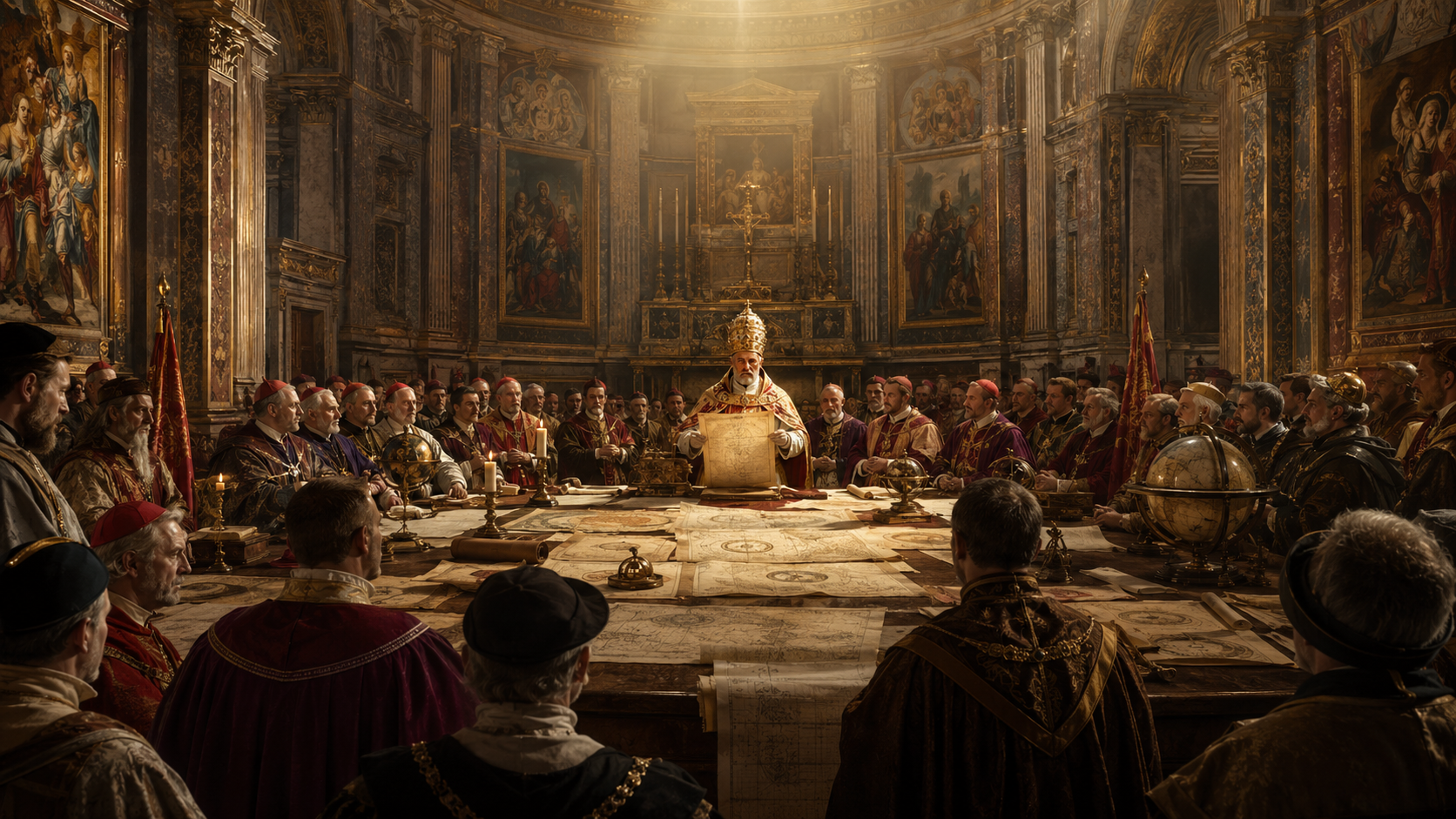
Theoretically, the Earth is tilted, and that not only affects the duration of the day, but also influences how long a year is. A complete turn of the earth around the sun is called a solar year and is represented by the four seasons: autumn, winter, spring and summer. Because due to the inclination of the earth, the amount of light that reaches the earth is not equal on the same rotating side. The problem to account is that the number of solar days that occurs in a solar year is not a whole number, it is almost 365 days so each year there is a lag of ¼ days and every four years there is a lag of 1 full day. So, if the calendar had only 365 days and 12 months, like the Egyptian one, over the years it will deviate seasonally and the day will never coincide again. Julius Caesar realised this lapse in the Egyptian calendar, so he ordered the Julian calendar in 46 BC in which he added this correction through the leap year. Even so, this is not perfect, because all it is doing is creating a loop based on a non-perfect calculation such as the solar year, so that the lag does not increase. Leap year is like putting a patch on a hole, the hole is still there, but nobody sees it. Even so, four years does not exactly make 1 full day of time lapse. Well, a solar year is not 365, it is 365.242181 days. 365 days 5 hours, 49 minutes and 12 seconds. So, adding a day every four years is a little too much. The rule that governed leap years generated a delay of 10 days in the civil calendar with respect to the astronomical calendar. On February 24, 1582, Pope Gregory XIII issued the bull Inter Gravissimas, by which the Gregorian calendar came into force. This established that on October 4, 1582, there would be a leap in time and would become October 15, 1582. In addition, it was established that there would be a leap year when the year in question was a multiple of 4, with the exception of the year’s multiples of 100 -except for multiples of 400, which would be leap-. In total, the Gregorian calendar fixed 97 leap years every 400 years, instead of the 100 that the Julian calendar marked. The calendar was immediately adopted in countries where the Catholic Church had influence, while Protestant, Anglican and Orthodox countries postponed its implementation for years or even centuries, and some even continue to call it the Julian calendar, not to recognise the authority of Rome’s Vatican
The Gregorian -solar- calendar, considered as official on a global level, does not achieve a perfect concordance between the civil year and the astronomical year either, since the speed of rotation and translation of the Earth slows down and forces the dates to be reviewed once every 3,216 years. Our date of birth is adapted to the Gregorian calendar, which is the most widespread and used in the world today. Its birth is marked by the presence of Jesus of Nazareth, the figure of this being the one that began Year 1 after Christ. But it is not the only current calendar that indicates a different chronology. For the Jewish calendar we are in 5775 from the patriarch Abraham, and in turn, for the Muslims we are in 1435 from the prophet Muhammad. And it does not end here, for the Hindus and the Chinese, we are in 1936 and 4650 respectively. Which indicates to us, once again, that time is relative and illusory, programmed by minds that seek to establish their plan or reality.
